The museum has launched a 3D digitisation campaign of objects that belonged to Matisse, an important part of the museum’s collection which remains little known to the public.
The museum keeps a large part of the artist’s personal collection of objects (138 in all), from pieces of furniture (armchair, tables, showcases) to crockery (glassware, earthenware) and vases, including many fabrics (curtains, rugs, clothes), all of various origins and periods. This disparate set is as much part of the artist’s mental landscape as it is his living environment.
A 3D digitisation campaign of these objects exhibited on a rotating basis in the rooms of the musée Matisse aims to make this collection accessible to a wider audience and to researchers around the world.
Thanks to the development and recent advances in new technologies, the models created are of unprecedented finesse and can be manipulated virtually by several users at the same time using an intuitive interface.
Winner of a call for projects launched by the Nice Côte d’Azur Metropolis (Economic Dev.), VIZUA worked to create five models which find several fields of application, allowing us to enhance the municipal collections both scientifically and museographically.
In the field of research, this tool makes it possible to share objects with scientists all around the world who can, without leaving their desk, have access from their computer to a very fine view of the object and understand it in its full volume. Researchers and restorers can carry out an extensive remote, long-term analysis without having to physically handle the original piece and the risks this involves.
In the museographic field, this tool now means these objects can be presented at the musée Matisse and in museums around the world, without taking them out of storage to share them with as many people as possible. These 3D models are also a starting point for broader work and allow not only the virtual reconstruction of the entire collection of objects, but also, in the long term, a reconstruction of Matisse’s studio such as that of the Régina.
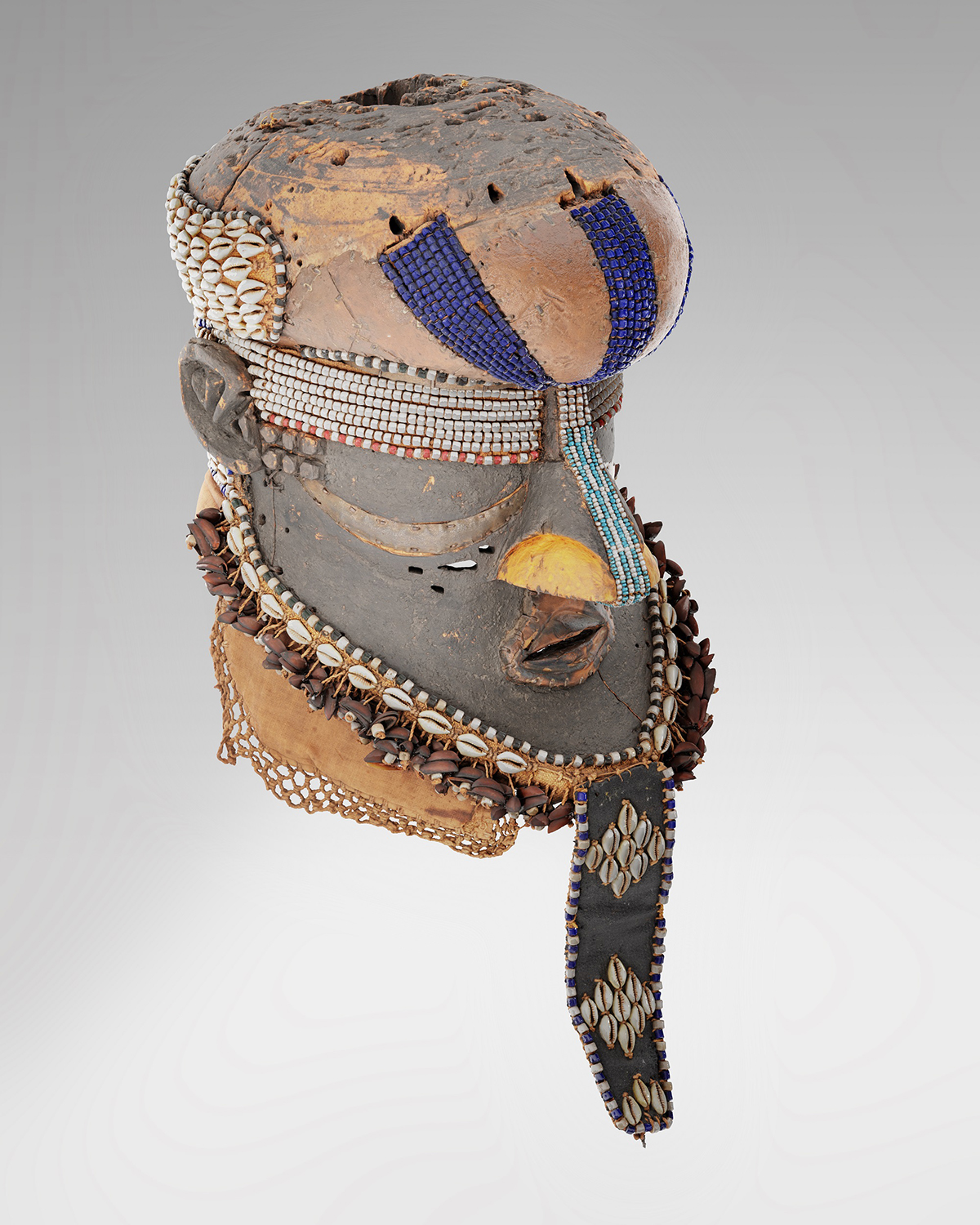
“Bombo” mask
Kuba Kingdom, Democratic Republic of Congo, 19th–early 20th century
Wooden mask, textile fibres, shells, pearls
Bequest of Mrs Henri Matisse, 1960, Musée Matisse Nice (inv. no 63.2.137)
This “Bombo” mask is one of the three main types of royal masks, worn during costumed events, reproducing the myths of Kuba origins. It embodies the spirit of an ancient “pygmy” who spoke on behalf of the common man. The domed, widened forehead, wide nose and elaborate ornaments, in this case, copper bands, textiles, shells and pearls, are some of the common features of this very expressive mask.
Matisse might have acquired it at a Paris auction of objects belonging to his former Fauve colleague Maurice de Vlaminck in 1937. Matisse often acquired objects relating to established themes in his work, art and collection for mutual reinforcement. The inventive profiles of this headdress may have really appealed to him: as such, we notice a proximity to the Jeannette V sculpture by Matisse, in the projecting ovoid of the forehead and treatment of the ears. The ambiguity of expression created by the Kuba artist for the symbol of the eye (do the metallic bands represent the outline of a closed or open eye, for example?) finds an echo in Jeannette V, as well as in several other portraits by Matisse.
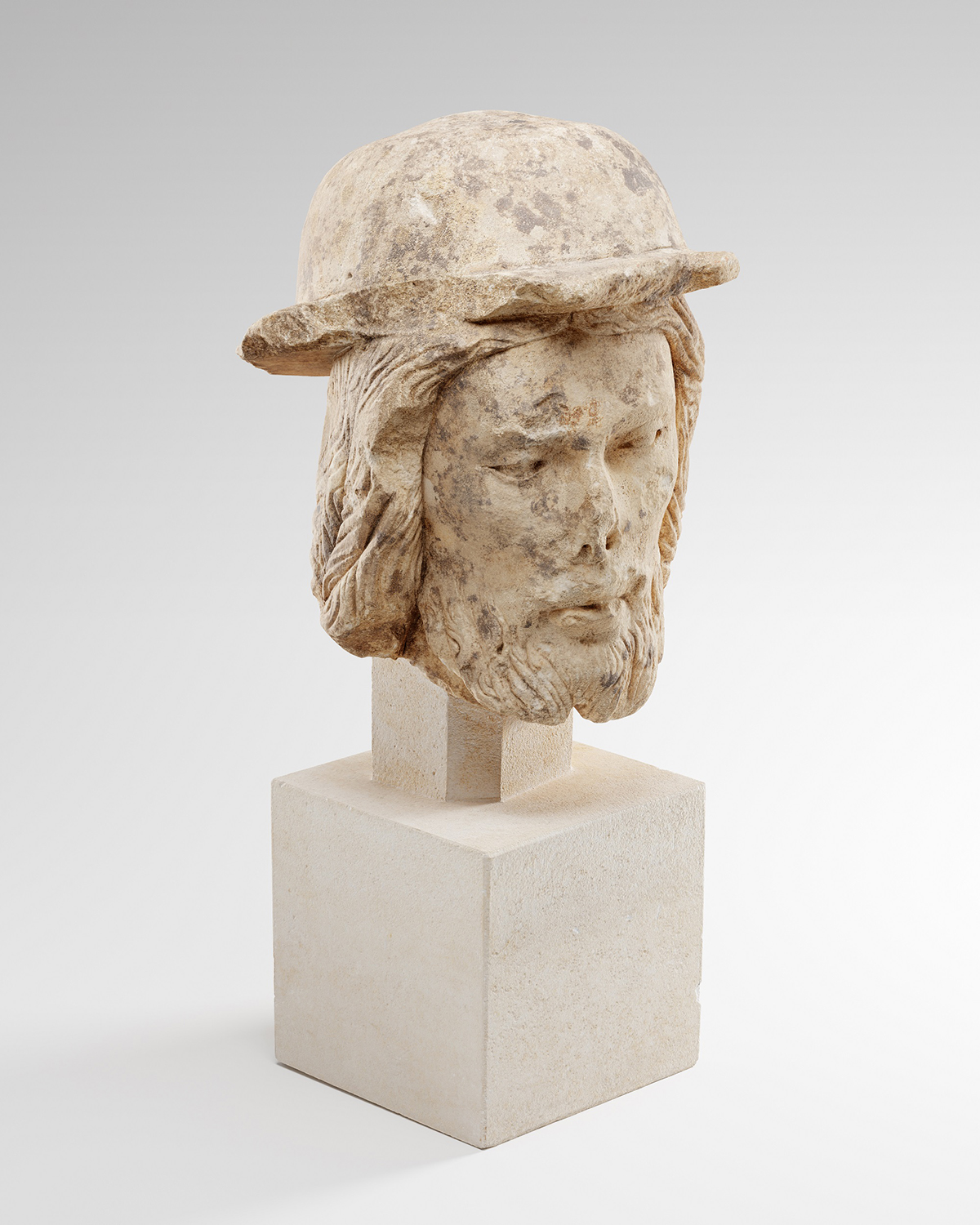
Saint’s head
France, 13th–14th century, limestone
Bequest of Mrs Henri Matisse, 1960, Musée Matisse Nice (inv. no 63.2.141)
Matisse acquired this sculpture in 1918 and subsequently kept it in his studio. It’s the head of an apostle, most likely Saint James. It’s remarkable for the delicacy of its facial features, which give it an almost feminine appearance, in particular its almond-shaped eyes, delicately carved, its pursed lips and long, narrow nose. The Middle Ages, from which Matisse also had other items, including a Romanesque capital, stand out as an important reference in his work, and this Saint’s head may have had resonance in the design of some of his sculptures, in particular in their monumental character. Romanesque art also interested him as an example of the encounter between Western and Eastern art: “their contributions open up new paths” (Matisse to André Verdet, 1952).
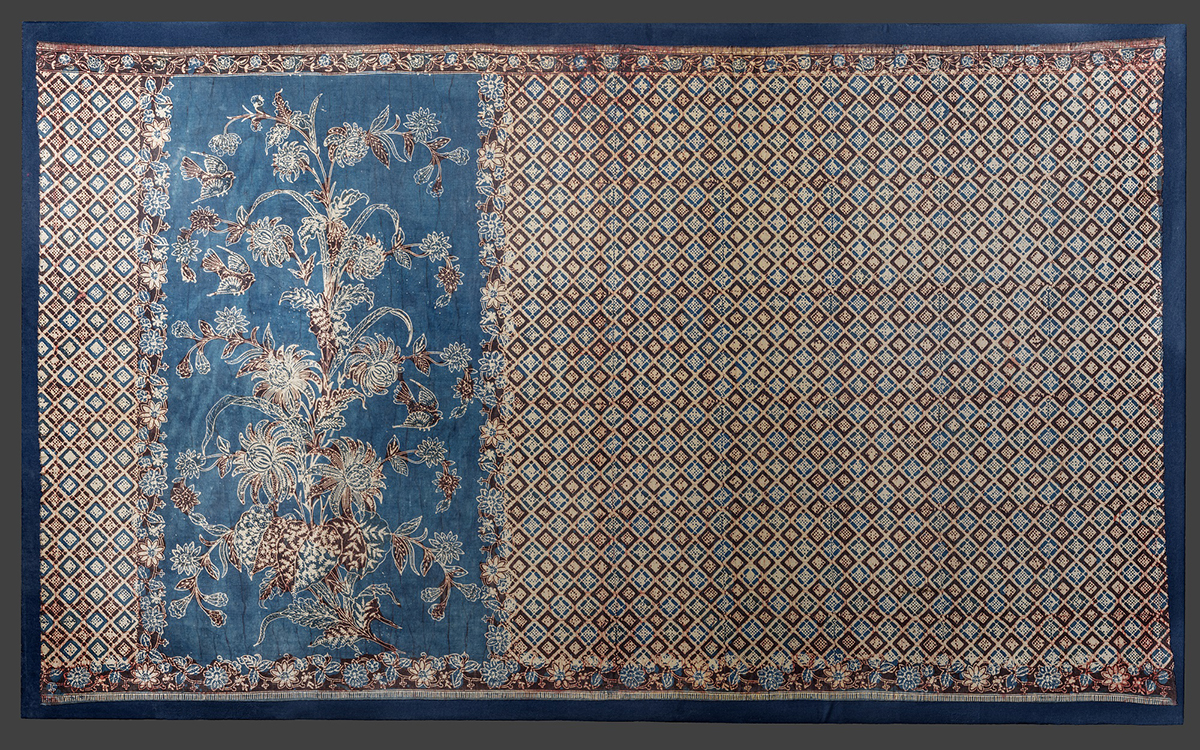
Fragment of “Kalamkari” cloth
Southern India (?), hand-printed cotton
Miller Matisse donation, 2011, Musée Matisse Nice (inv. no 11.1.8)
Matisse amassed innumerable fabrics, embroideries and hangings of which we don’t always find direct traces in his studio or his work. Such is the case of this kalamkari, a large rectangle of cotton whose patterns, combining floral arabesques and geometric repetitions, confirm the artist’s taste for decorative expansion marking the surfaces of the objects and textiles from outside Europe that he collected throughout his life.
The term kalamkari, of Persian origin (from kalam, brush and kari, hand), designates an ancient technique of painting on textile, often inspired by plants, practised in Iran but also in Andhra Pradesh (Southern India). Initially made by hand, the drawings were replaced in the 19th century by block prints. This craft could only interest the fabric lover Matisse, another “kalamkari” belonging to him also being kept in the departmental museum of Cateau-Cambrésis.
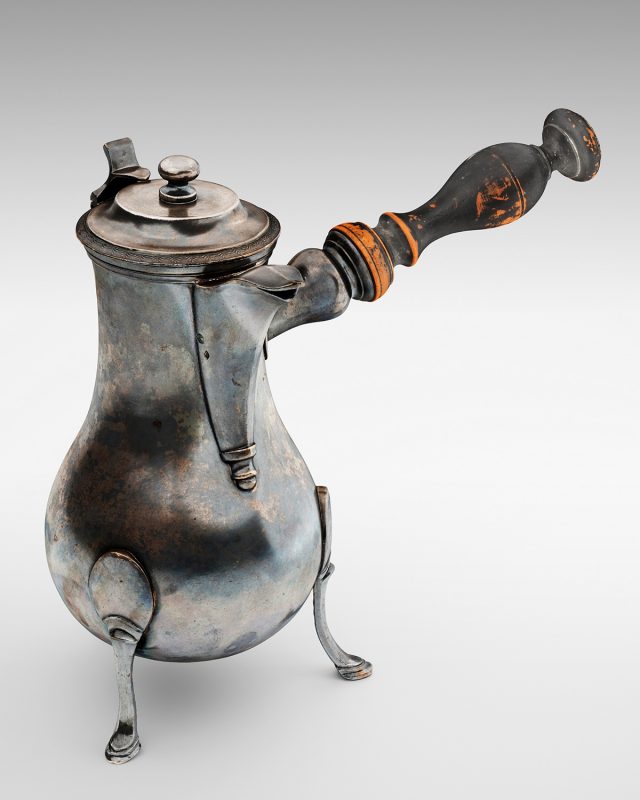
Chocolate pot
France, early 19th century, silver, stained wooden handle
Bequest of Mrs Henri Matisse, 1960, Musée Matisse Nice (inv. no 63.2.206)
The motif of the silver chocolate pot runs through Matisse’s work, its bulbous shape and reflective surface giving rise to interesting variations around a classic subject which can be compared to the still lifes of Chardin which he regularly admired at the Louvre during his formative years.
The chocolate pot in the museum features in the famous Nature morte au coquillage from 1940. But already in 1900, then 1902, the artist represented the one given to him as a wedding gift by his friend Albert Marquet. In two drawings and two paintings, it took on a life of its own, its spout almost giving it the appearance of a bird. This shows the intimacy Matisse established with his domestic accessories that he appropriated to the point, sometimes, of anthropomorphising them. It wasn’t a question of copying them but translating onto paper or canvas the sensations and emotions they aroused in him.
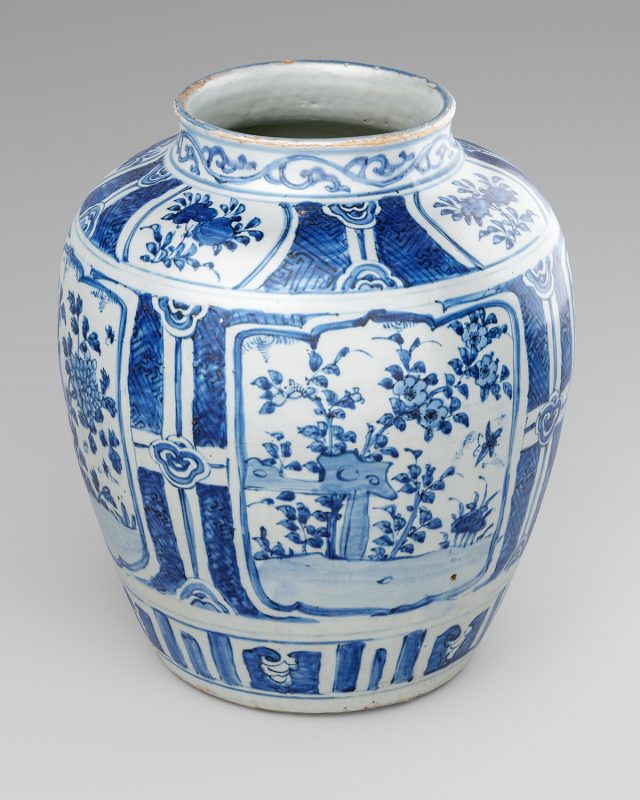
“Blue and white” jar
Ming dynasty (1368-1644), 1st third of the 17th century, end of the Wanli period (1563-1620) – Tianqi period (1621-1627)
Bequest of Mrs Henri Matisse, 1960, Matisse Museum Nice (inv. no 63.2.199)
From the beginning of the 20th century, Matisse operated in a circle of artists and enlightened enthusiasts who were interested in the arts of China. In particular, he spent time with the Steins, who had a collection of Chinese cloisonné enamels, as well as Matthew Stewart Prichard, a specialist in ceramics from the Song period and antique bronzes. It was from the 1920s, when he was working on the sets and costumes for the ballet Le Chant du Rossignol (The Song of the Nightingale), inspired by the Far East, that he bought several Chinese objects from various periods in Nice, including perhaps this jar, among other porcelain items. It can be recognised in several still life drawings and two paintings: L’Intérieur au chien (1934, Baltimore Museum of Art) and Intérieur avec femme endormie (1940, National Gallery of Art, Washington).
It’s a jar made in the 17th century in Jingdezhen, the main centre for production of Chinese porcelain. The decoration painted in cobalt blue is made up of panels and cartouches with traditional floral motifs (peonies, chrysanthemums, branches of flowering peach trees), surrounded by geometric interlacing. This compartmentalisation of decoration is characteristic of so-called “kraak” porcelain intended specifically for export to Europe.