Carmen Leschennes, renamed “Katia” by Matisse who, according to Aragon, considered that this name “better suited this blonde woman”, posed for two years between 1950 and 1952 for the painter (Henri Matisse, roman, 1971). Her athletic, solid body, which reminded him of the hieraticism of demi-gods, circulated in his work after he had finished designing the Chapelle de Vence (1951).
He wanted a different type of model that would change him from skinny women. He was a good man. With him, work was work. A clock. He sometimes went out for fun. We enjoyed eating Chinese food in Nice.
Carmen Leschennes
Carmen’s life remains mysterious. Only a few sources allow us to distil snippets of her life and personality. Born in German-speaking Switzerland, she arrived in Paris a few years after the Second World War.
France didn’t appeal to me. I found the French very superficial. But I thought it would be easier for me to get my work permit here. Times were difficult. You could say I was starving.
Carmen Leschennes
She taught English for a while and then earned her living (6 francs an hour) by posing for artists. She posed for Matisse in Nice from October 1950 to October 1951, then from February to July 1952.
In an interview reported in a local monthly, we learn that she in turn became a painter, under the name of Jaluse. She was very fond of English landscape painters, Turner in particular, and especially used the colour blue in her paintings.
Leafing through a catalogue of an auction in 1962, we also learn that she had a collection of modern art, including ten graphic works by Matisse.
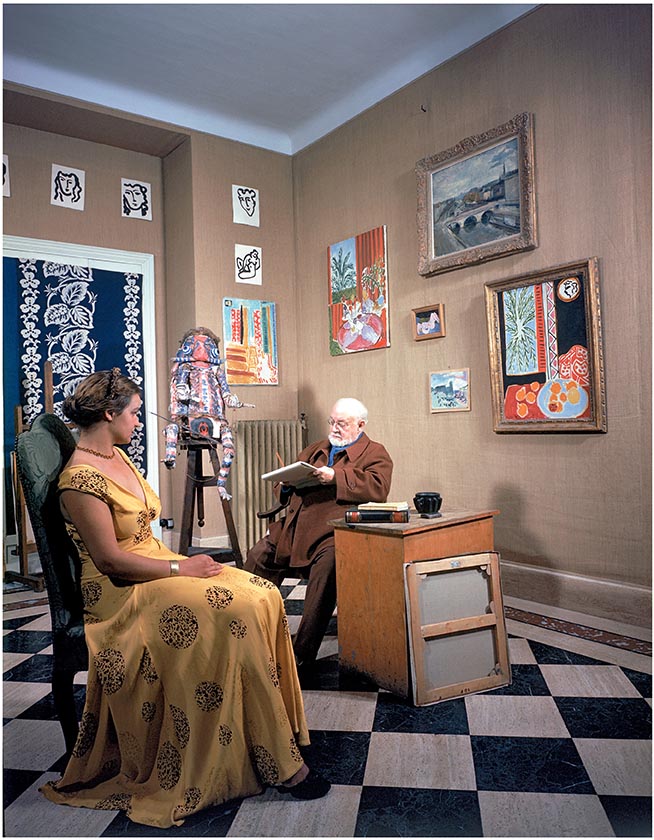
Photograph by Dmitri Kessel
© Dmitri Kessel/The LIFE Picture Collection/Shutterstock
Carmen in the work of Matisse
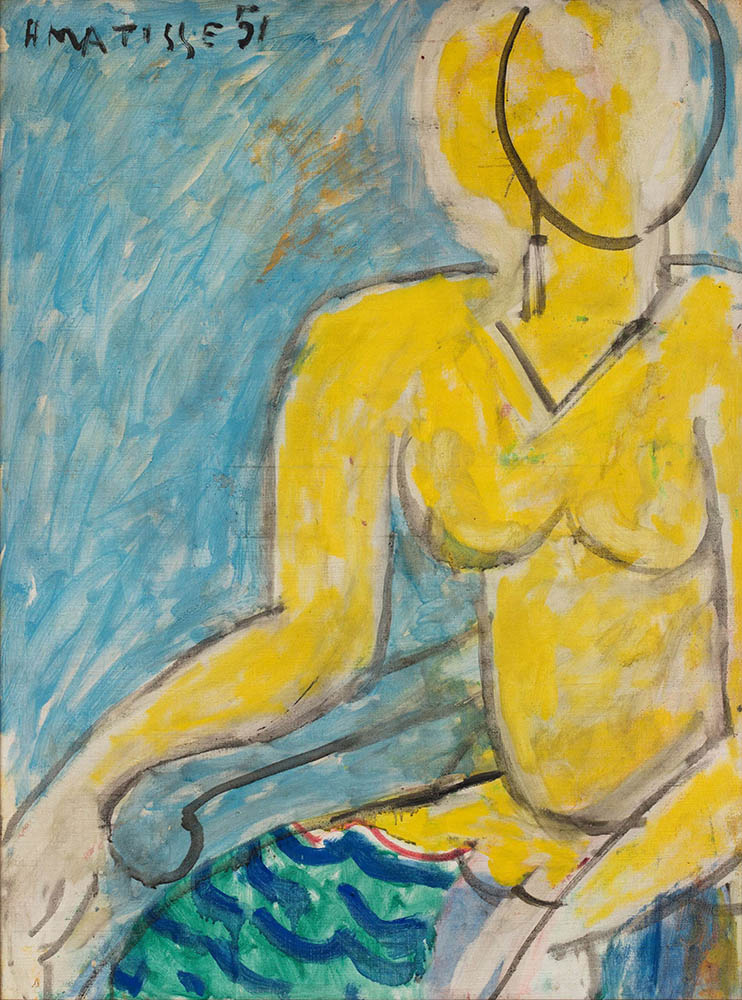
© Succession H. Matisse | © Lyon MBA – Photo Martial Couderette
With Carmen, Matisse found the culmination of his pictorial and sculptural work: she posed for his last two paintings (Femme à la gandoura bleue, 1951; Katia à la chemise jaune, 1951) and his last sculpture (Katia/Taille cassée/Le Platane, 1951). But the anatomy of the model, her imposing stature and vertical vigour, more broadly nurtured the creative process of the artist. Her influence can be read in certain large brush drawings (such as Nu aux oranges (1951) or Grand acrobate (1952)) and unfolds even in the monumentality of the large cut-outs. Nicknamed “The Plane Tree” by the artist, Carmen also illustrates the metamorphosis of humans into plants.
Carmen thus synthesised three themes that preoccupied Matisse at the end of his life and circulated from one technique to another: the statuesque verticality of the figure, the monumentality of the composition and the symbiosis of feminine and vegetal.
Carmen through a work from the collection:
Katia/Taille cassée/Le Platane, 1950
Carmen’s strong, highly sculptural body, conveying both self-assurance and size, invited Matisse to rethink a recurring motif in his work: the standing nude, a theme found everywhere, from some sculptures of 1906 (Nu debout, Nu campé, bras sur la tête) to the illustrations of the book Florilège des Amours de Ronsard (1948) or the 1952 cut-outs (Femme avec amphore or Nu bleu debout).
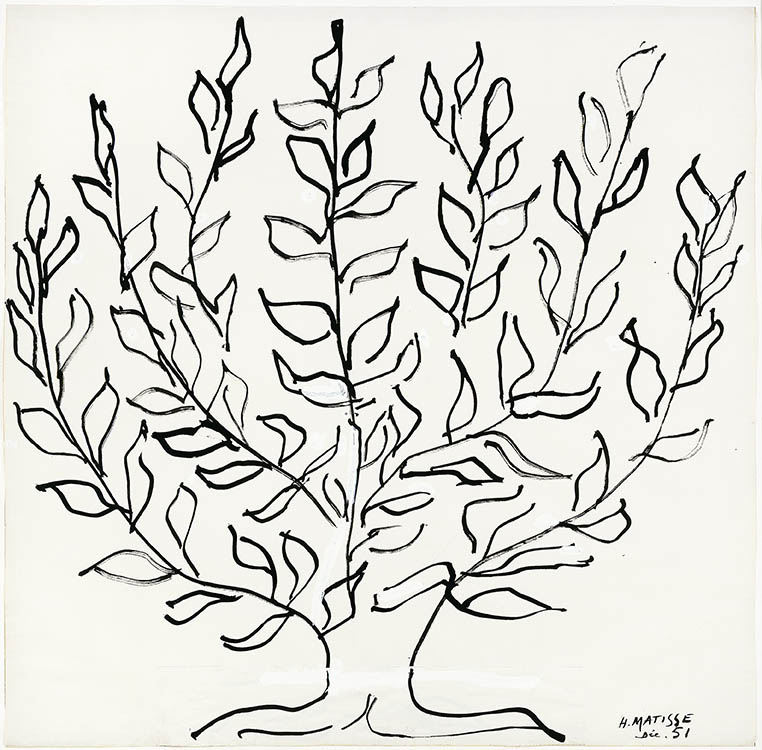
The sculpture has a triple title, Katia/Taille cassée/Le Platane, which speaks well of the model’s polymorphism. Pillar, stem or trunk, she is no longer quite a woman since she is deprived of certain human attributes: her feet are absent, and her head stands up like a bud. During the execution, the sculpture broke at the waist. This fragility, which Matisse decided to retain, in no way obstructs this principle of plant growth, which can be found in several Matisse creations of the time. This sculpture, for example, resonates with the drawings of trees that Matisse made for the ceramics in the dining room of the Villa Natacha (Saint-Jean-Cap-Ferrat) for the publisher Tériade.
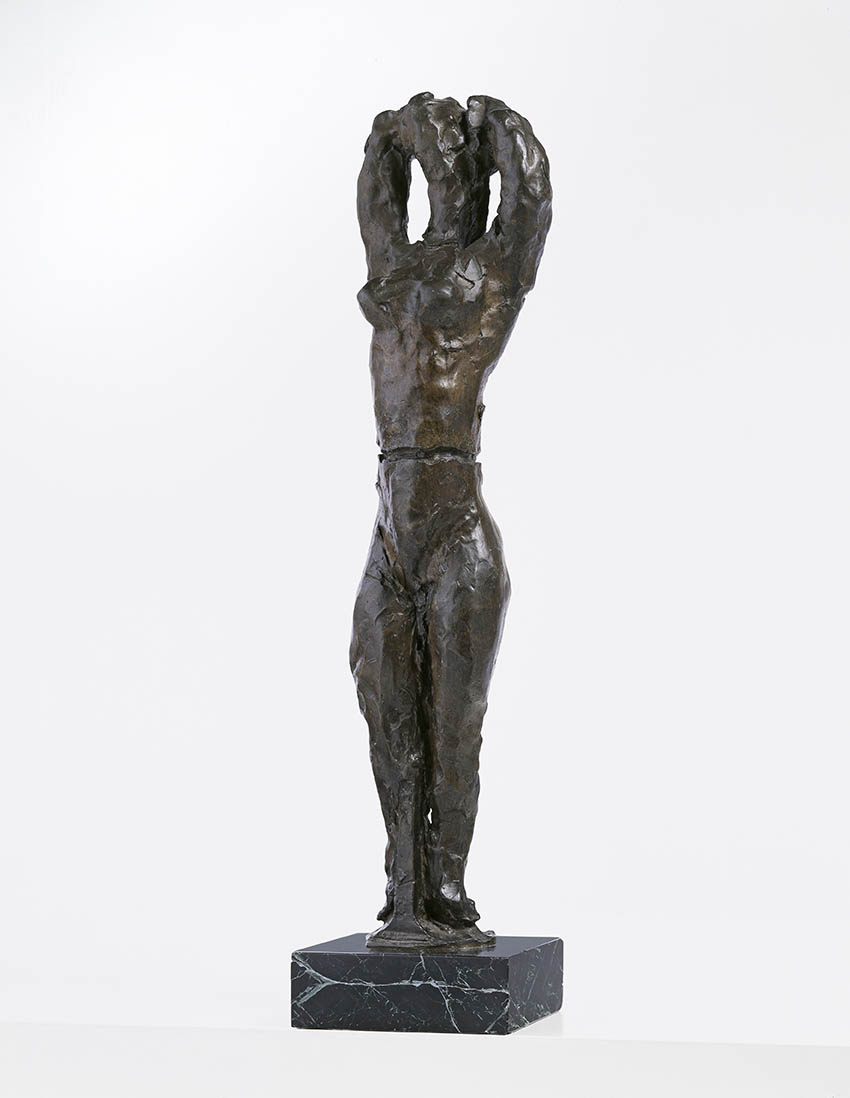
© Succession H. Matisse Photo © François Fernandez
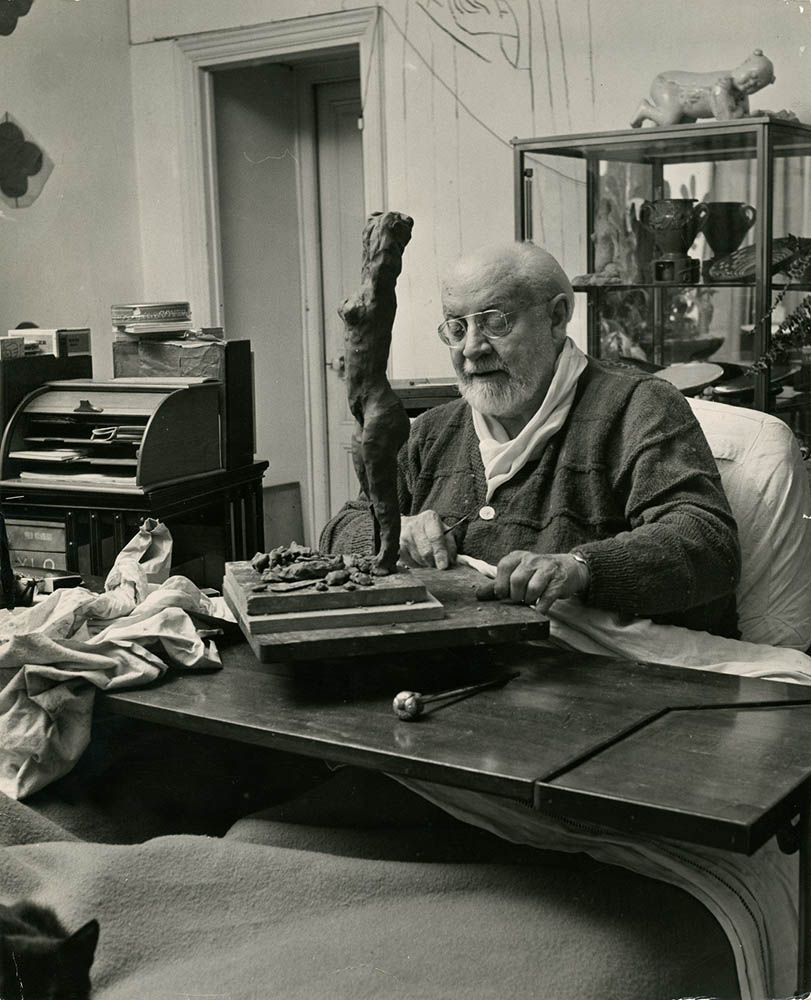
Photograph by Dmitri Kessel
© Dmitri Kessel/The LIFE Picture Collection
© Succession H. Matisse Photo © François Fernandez