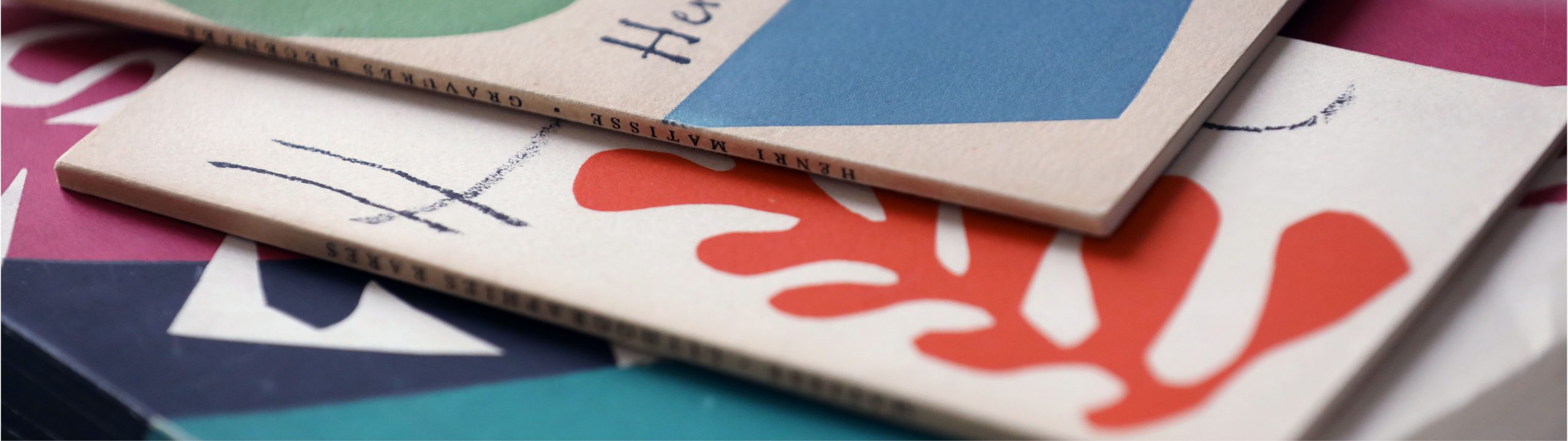
The Documentation Centre of the Musée Matisse keeps a set of books that were part of Henri Matisse’s personal library. In 1962, when the museum’s collections were being put together, Mrs Henri Matisse donated more than fifty works that were in the Régina, the artist’s last place of residence until 1954. Subsequently, other members of the family, Mrs Marie Matisse, Mr Gérard Matisse and, in 1988, Mr and Mrs Claude Duthuit added new donations to this collection. Of different origins and genres, the works from the Régina allow us, for some of them, to get to grips with the artist’s aspirations as a reader and understand the links he had with certain authors.

Photo © François Fernandez
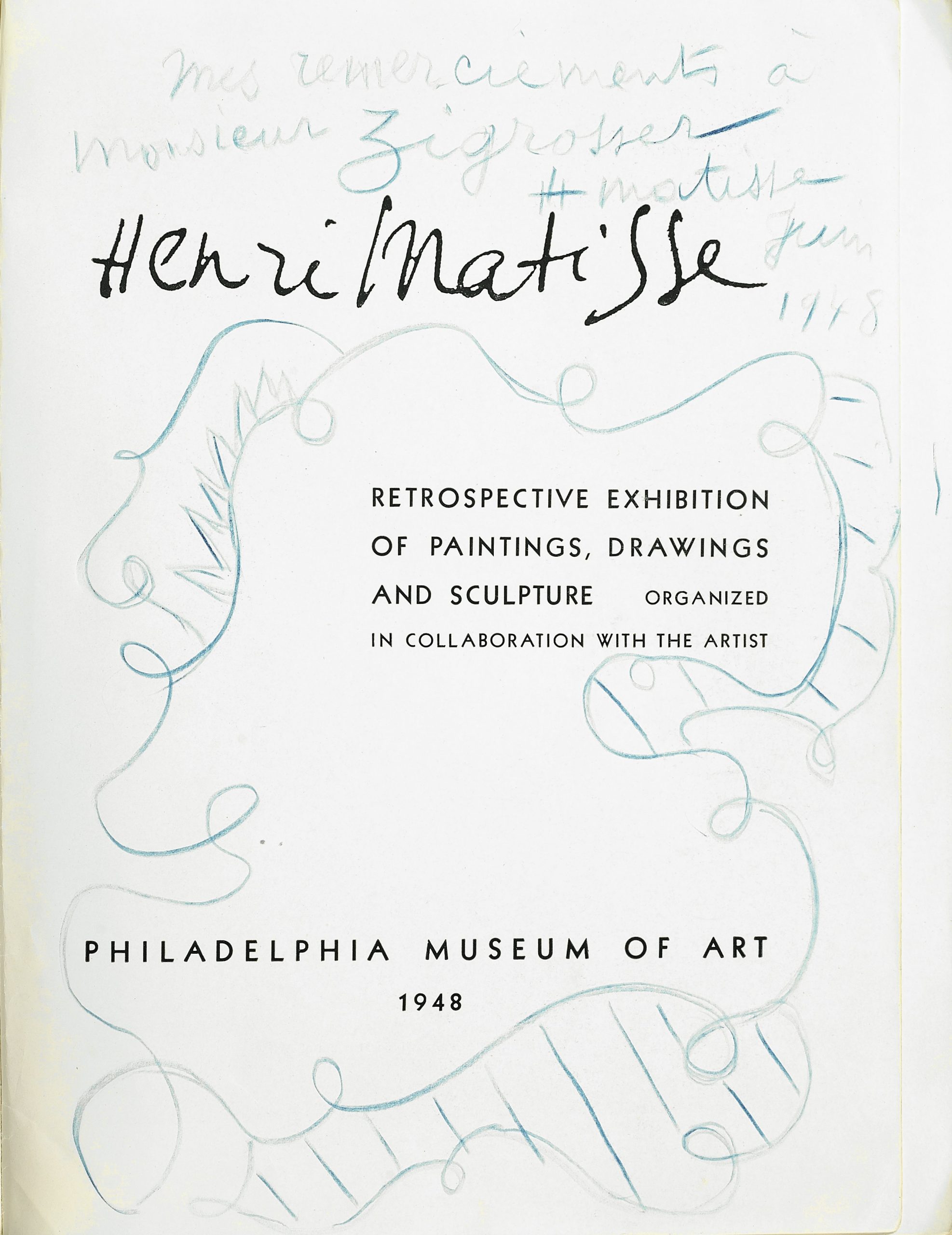
Photo © François Fernandez
The oldest work in this collection dates from 1909 ; paperbacks for the most part and of current appearance, these books were mainly published between 1943 and 1951. This mixed set consists of novels, collections of poetry, art history books and exhibition catalogues. Nearly all the authors of these works, writers or biographers, dedicated their books to Henri Matisse, as a testimony of a friendship, admiration or simple professional relationship. Some dedications are remarkable. As such, René Char accompanies his collection of poems Le marteau sans maître with his words dated 30 October 1945 – To Henri Matisse, the master of singing suns and inextinguishable silences. Jacques Prévert makes do with these words – For Matisse, his admirer – and his signature, a collage made of ferns for the title page of Paroles.
Writers close to Matisse such as Louis Aragon, who would publish, in 1971, Henri Matisse, Roman, or Elsa Triolet, are among those for whom a large number of works are kept in this library. Poet friends, Tristan Tzara and, more particularly, André Rouveyre and Pierre Reverdy, with whom Matisse maintained important written relations, join them in this group.
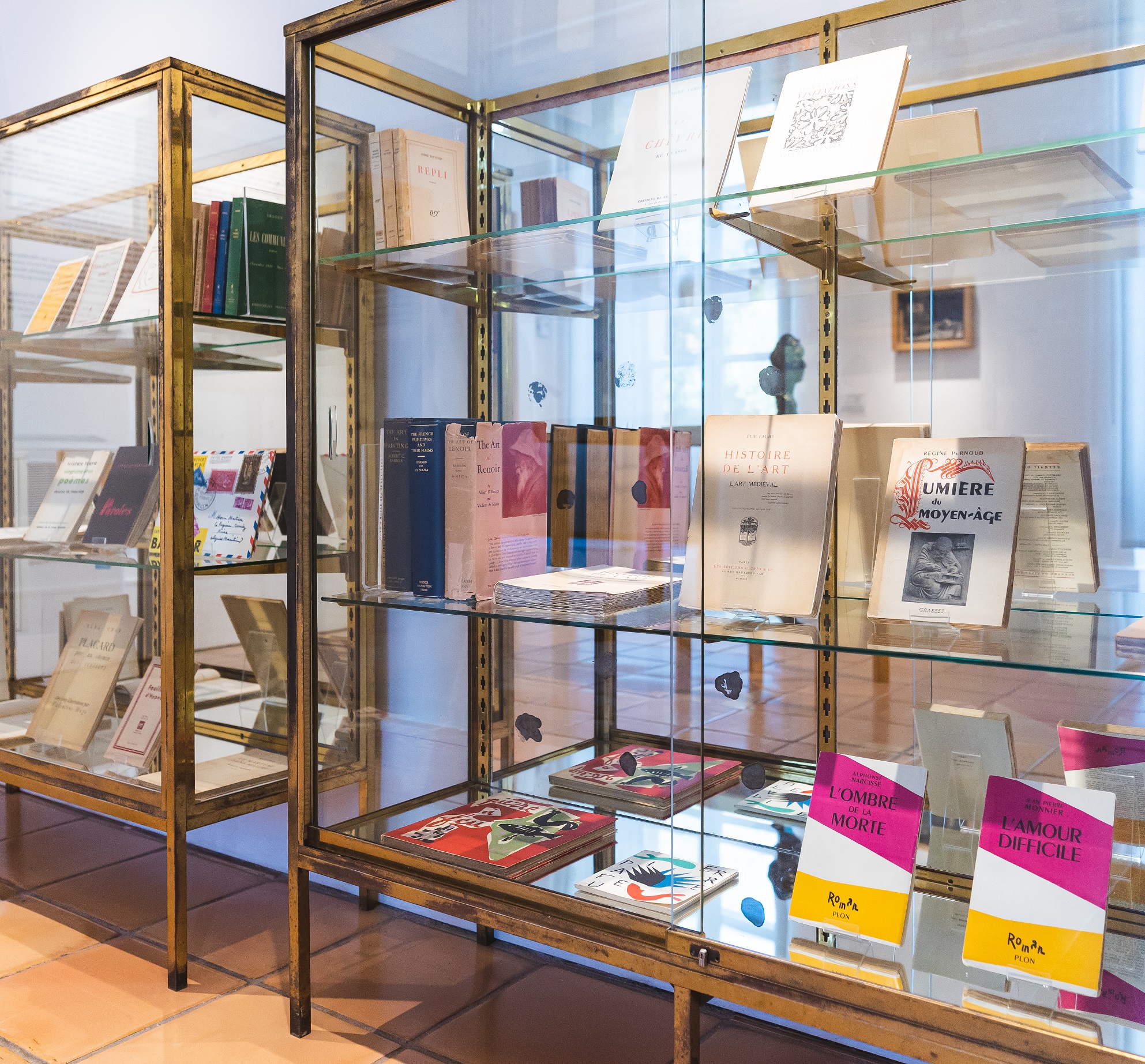
Photo © Ville de Nice – J.V.
© Succession H. Matisse | Photo © François Fernandez
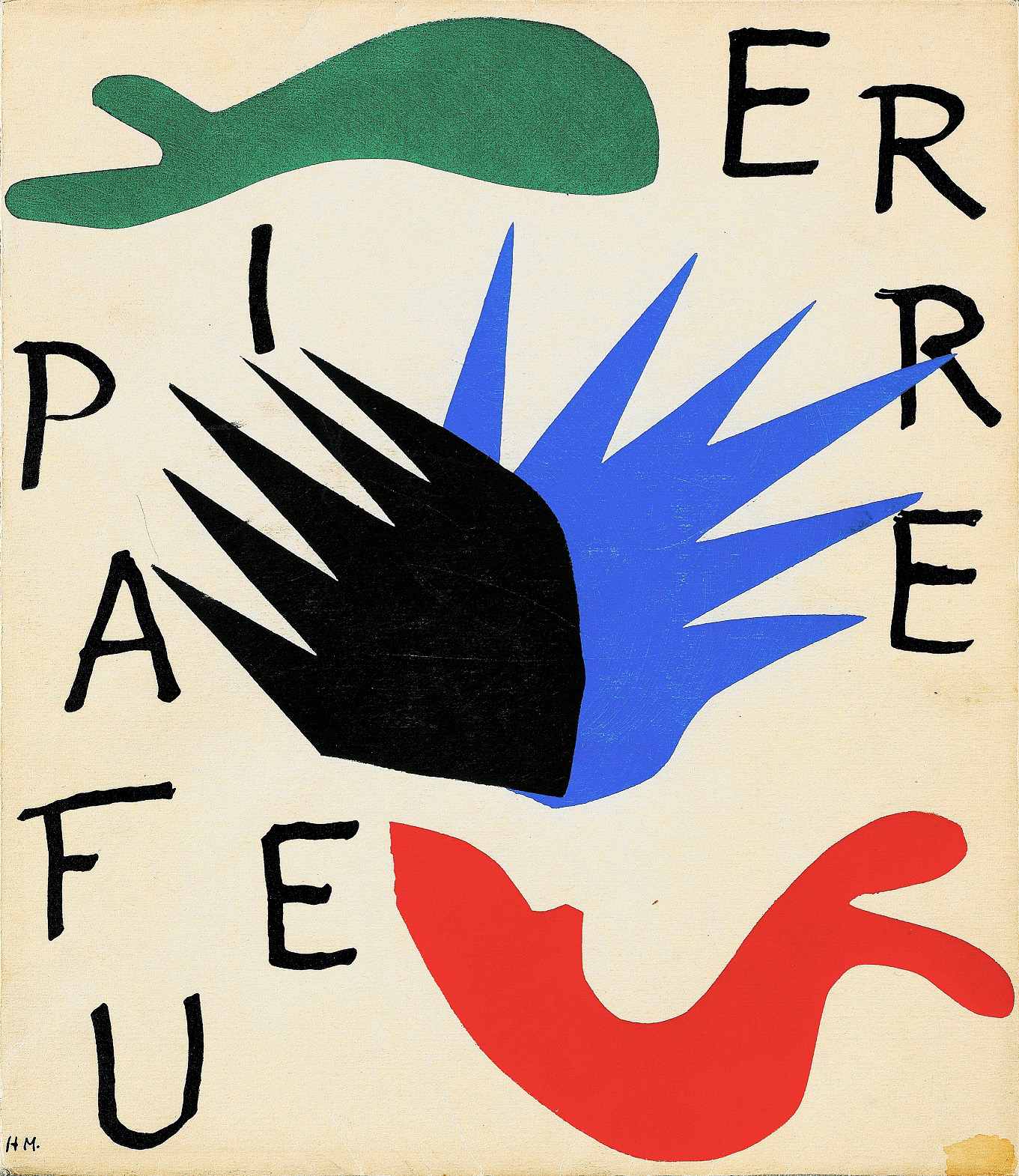
Other books have their covers decorated with motifs taken from paper cut-out compositions or drawings by Matisse. They come from publications produced at the time, such as the review Verve from the publisher Tériade, or Pierre à feu from the publisher Maeght. Some were published by the artist himself, for example, in 1920, Cinquante dessins par Henri Matisse with an introduction by Charles Vildrac. The frontispiece of the Henri Matisse retrospective exhibition at the Philadelphia Museum of Art in 1948 bears around its title a dedication by the artist surrounded by arabesques drawn in blue pencil: Mes remerciements à Monsieur Zigrosser H. Matisse juin 1948. This precious ensemble helps establish a panorama that extends to different civilisations whose art and culture caught the interest of Matisse (Paul-Émile Victor Poèmes esquimaux (1951).
Thanks to this unique collection, research perspectives are opening up in a still underdeveloped field, that of Matisse’s relationship with classical and contemporary literature. The fact that the artist himself produced numerous illustrated books, including Jazz (Tériade, 1947), testifies to his special relationship with books, which are among the most important aspects of his art.