
Matisse discovered Nice, more than a hundred years ago, in December 1917. He produced most of his work in this city where he lived until his death in November 1954. The many places where he lived and worked deeply influenced his creative process and left their imprint on all the decisive stages of his work including the culmination of his artistic career, the cut-outs and the Chapelle de Vence
Most come here for the light and the picturesque beauty (or scenery). I am from the North. The large colourful reflections in January, the brightness of the day are what attracted me to settle here.
Bridault, 1952, quoted in Henri Matisse, Écrits et propos sur l’art, Paris, Hermann, 1971, p. 123
1917-1921: Discovering the city and first stays
December 1917 – March 1918
Hôtel Beau Rivage (107, quai des États-Unis, Promenade des Anglais)
When I realized that every morning I would see this light again, I could not describe my joy. I decided not to leave Nice, and I stayed there practically all my life.
Bridault, 1952, quoted in Henri Matisse, Écrits et propos sur l’art, Paris, Hermann, 1971, p. 123

© Droits réservés
April 1918
Studio, 105, quai des États-Unis

Photo: Archives Henri Matisse / D. R.
Looking for a studio, Matisse rented from his friend Léonce Pelletier a flat next to the Hôtel Beau Rivage, on the Promenade. Matisse’s son, Pierre, posed there for the famous painting Le violoniste à la fenêtre (Musée national d’art moderne, Centre Pompidou, Paris).

Photo: M. Bérard / D.R.
May – June 1918
Villa des Alliés, Mont-Boron
His hotel having been requisitioned, Matisse moved out on May 9, 1918 and rented for two months the villa des Alliés, situated in a tree-filled park. There he mostly painted landscapes. During the summer, his youngest son, Jean, joined the army.

Photo: M. Bérard / D.R.
Autumn 1918 – 1921
Hôtel de la Méditerranée (25, Promenade des Anglais)


Photo: D. R.
After spending summer in Issy-les-Moulineaux, Matisse returned to Nice and stayed at the Hôtel de la Méditerrannée which no longer exists today. He stayed there every winter until 1921. The interiors of his successive bedrooms became the main subject of his works. He turned them into a theatre set, investigating the effects of the subdued light filtering through the shutters and surrounding his models with fabrics, flowers and different kind of objects.
An old and good hotel, for sure ! And what beautiful Italian ceilings! What tiles! They were wrong to demolish the building. I stayed there for four years for the pleasure of painting nudes and figures in an old rococo salon. Do you remember the light that came through the shutters? It came from below like a theatre ramp. Everything was fake, absurd, amazing, delicious
Henri Matisse in Art News Annual, 1952, quoted in Henri Matisse, Écrits et propos sur l’art, Paris, Hermann, 1971, p. 123
Autumn 1921: Moving to Nice on the Cours Saleya
1921 – 1938
Pierlas Caïs Palace, 1, Charles Felix Square, Cours Saleya
Matisse rented a flat on the 3rd floor in the Pierlas Caïs Palace before moving to the 4th floor in 1927. From then on, he spent half of the year in Nice. In his flat/studio he positioned his models in carefully arranged and highly theatrical settings, using an array of props, furniture and fabrics from his own collection. Still-lives, interiors, nudes and odalisques are key features of his “Nice period”.
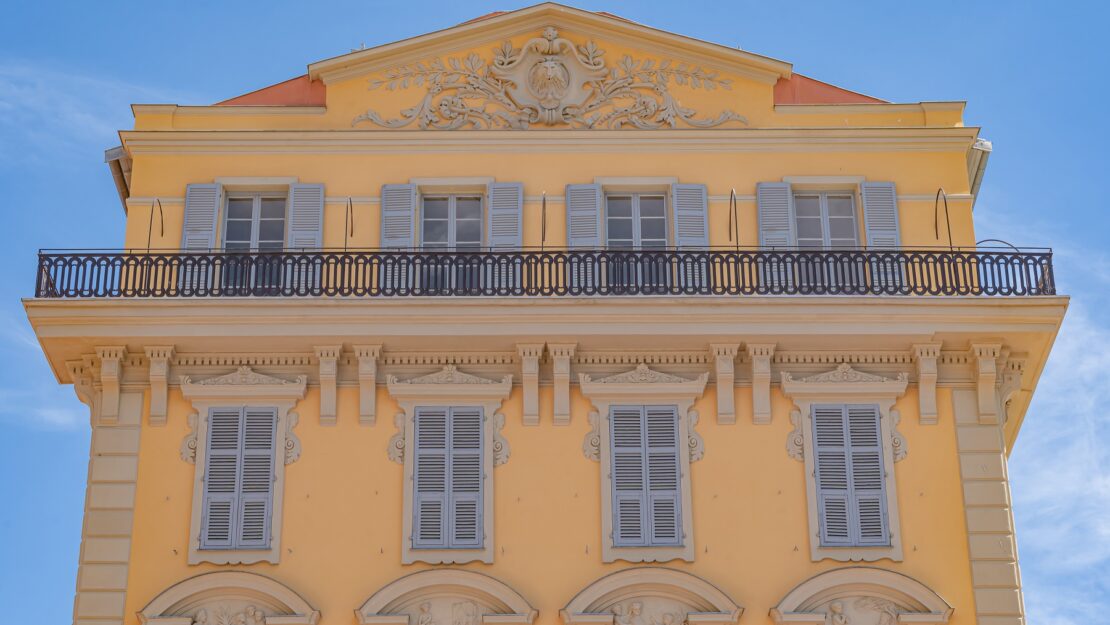
Photo © Renaud Schiff – Altaïr Productions
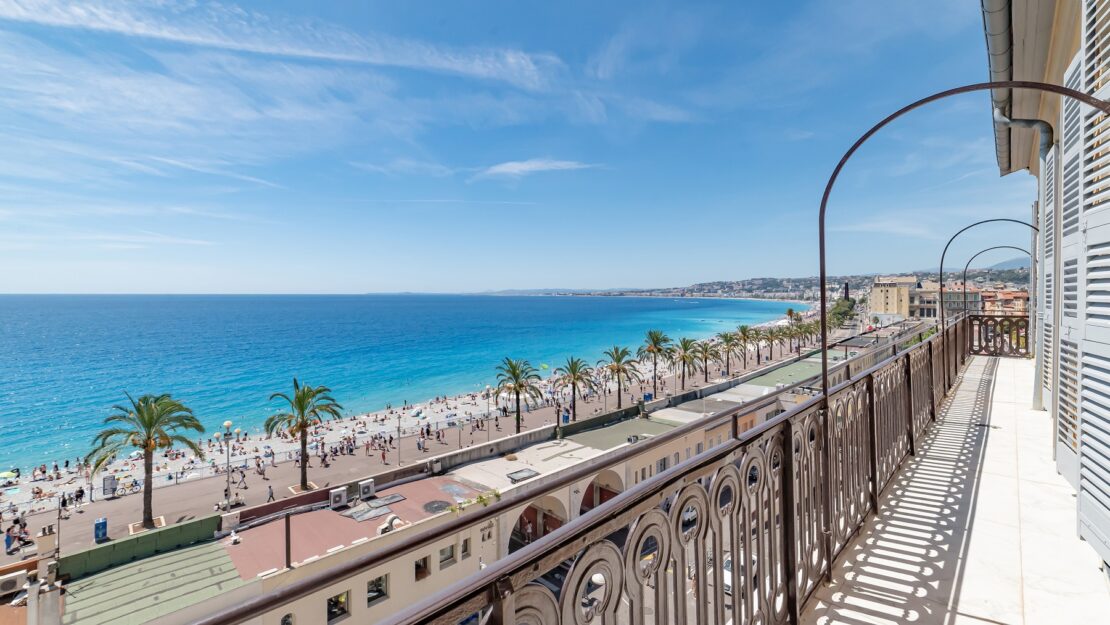
Photo © Renaud Schiff – Altaïr Productions

Photo: Archives Henri Matisse / D. R.

Nice, 1928
Photo: Archives Henri Matisse / D. R.
1931
Studio 8, rue Désiré Niel
Matisse worked to scale in this former garage converted into a studio and painted there the huge decorative mural, La Danse commissioned by the Barnes Foundation. In 1932, he hired Lydia Delectorskaya as a studio assistant and then, in 1933 as his wife’s companion. In 1935, Lydia became his model and his assistant.

Photo: Archives Henri Matisse / D. R.
October 1938: the Régina, Cimiez hill (71, Cimiez Boulevard)
January 1938

Photo: Droits réservés
Matisse bought a flat in this former hotel designed to welcome Queen Victoria at the end of the19th century
End of June 1943
Confronted with the threat of German occupation, Matisse moved in Vence to the villa Le Rêve. In December 18, 1938, he returned to the Régina. The space was much better suited to his last projects, the Chapelle de Vence and his monumental cut-outs.

Danseuse créole (on the floor), L’Escargot and Souvenir d’Océanie on the wall
Photograph by Lydia Delectorskaya. Photo: Archives Henri Matisse
1946
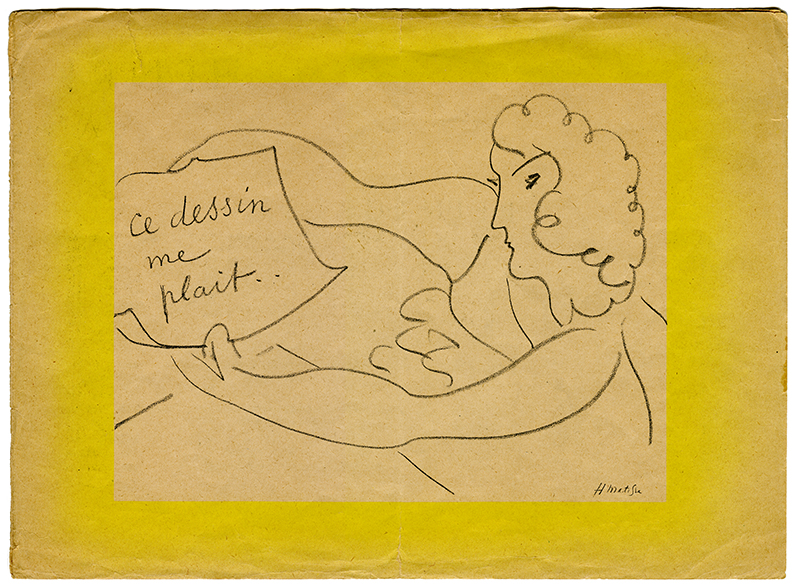
Photo © Musée Matisse Nice – N.L.
Matisse’s first exhibition in Nice, at the Palais de la Méditerranée.
1950
The Galerie des Ponchettes opened with an exhibition on Matisse and organised by the UMAM (Mediterranean Union for Modern Art). The Galerie des Ponchettes was selected as a potential space for the future Musée Matisse.

© Succession H. Matisse | Photo © D.R.

Musée Matisse Nice Archives | © Jean Gilletta

Musée Matisse Nice Archives | © Jean Gilletta
1951
Inauguration of the Chapelle de Vence.
3 novembre 1954
Matisse’s death. He is buried in the cemetery of the Cimiez Monastery.