Thanks to a special partnership with the Yomiuri Shimbun, the musée Matisse has set in motion a vast project of preventative conservation and restoration of works from the collection.
In 2024, a major off-site exhibition, the result of high-level cooperation of great scientific rigour, will present the treasures of the collection, more than 160 works in Tokyo (Japan). The Yomiuri Shimbun, the main Japanese press organisation whose cultural branch organises exhibitions, is behind the project. This is the same institution which, 70 years ago, with Henri Matisse, organised the first exhibition dedicated to him in the Japanese archipelago.
This project, with its exceptional scope, is backed by a sponsorship agreement which, between 2020 and 2022, made possible a vast project involving the study, preventative conservation, re-framing and restoration of major works by Henri Matisse, including the monumental cut-out Fleurs et fruits, which will be exhibited in Japan for the first time. Beyond the restoration of the works, this project allows the museum to begin a comprehensive research and preventative conservation programme around the paper cut-outs. This fragile medium, little studied until now, is an important part of the museum’s collection.
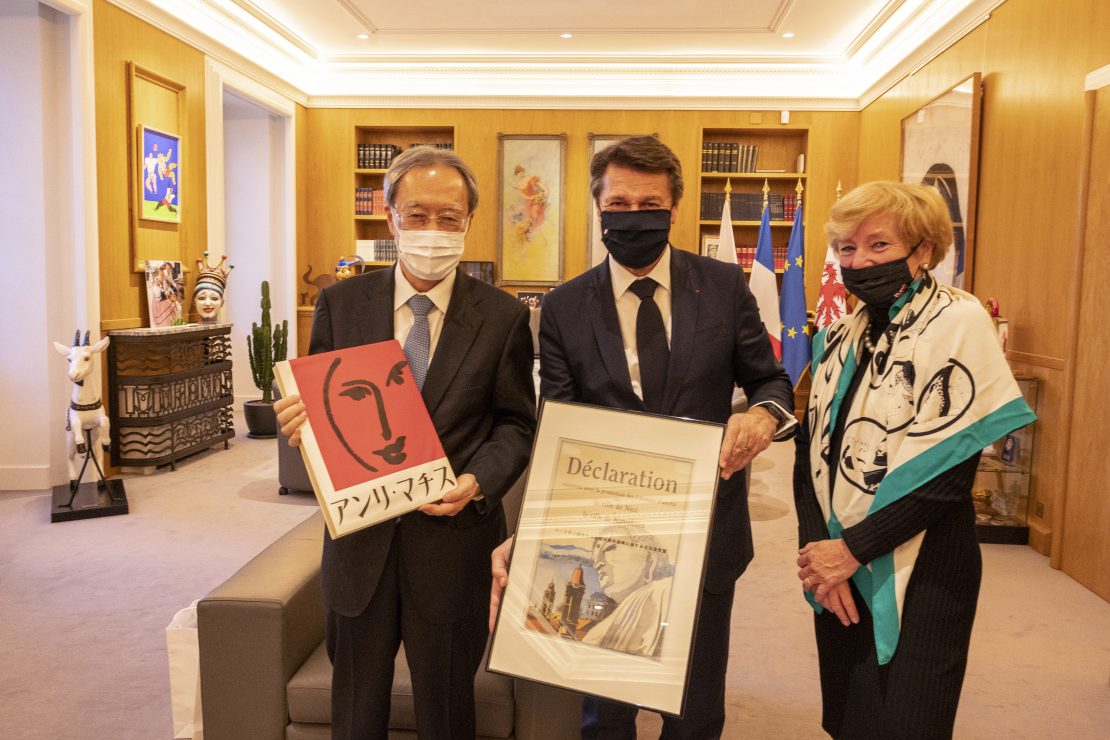
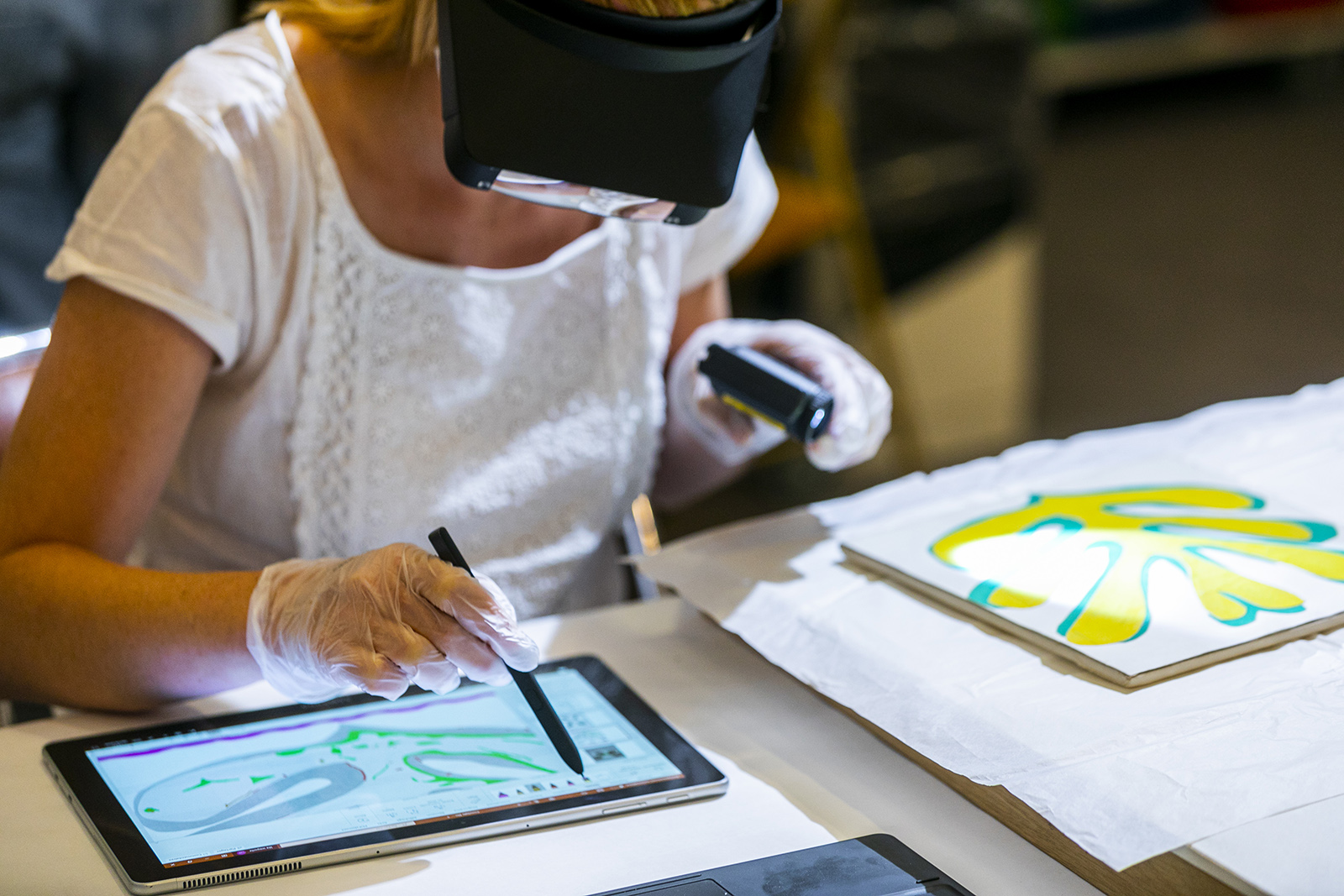
Photo © Ville de Nice – J.V.
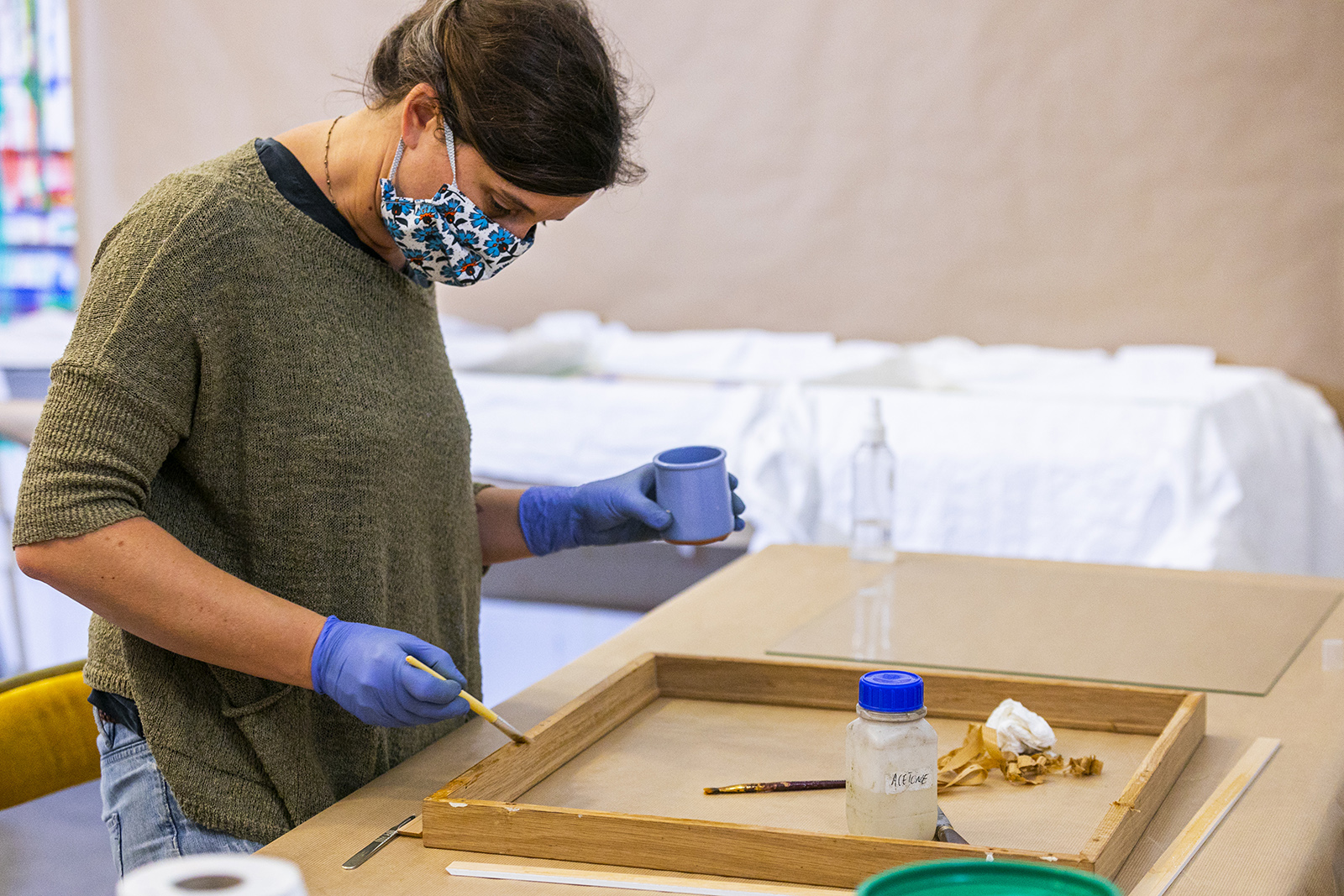
Photo © Ville de Nice – J.V.
Fleurs et fruits, from restoration to installation in its new showcase
Restoration
In summer 2021, the five panels of the monumental work Fleurs et fruits were taken out of their case for the first time since 1993. A temporary in situ restoration project began. The work, damaged mainly due to an infestation of silverfish, was restored in the presence of the public. Educational panels informed visitors about the work and the stages of its restoration.
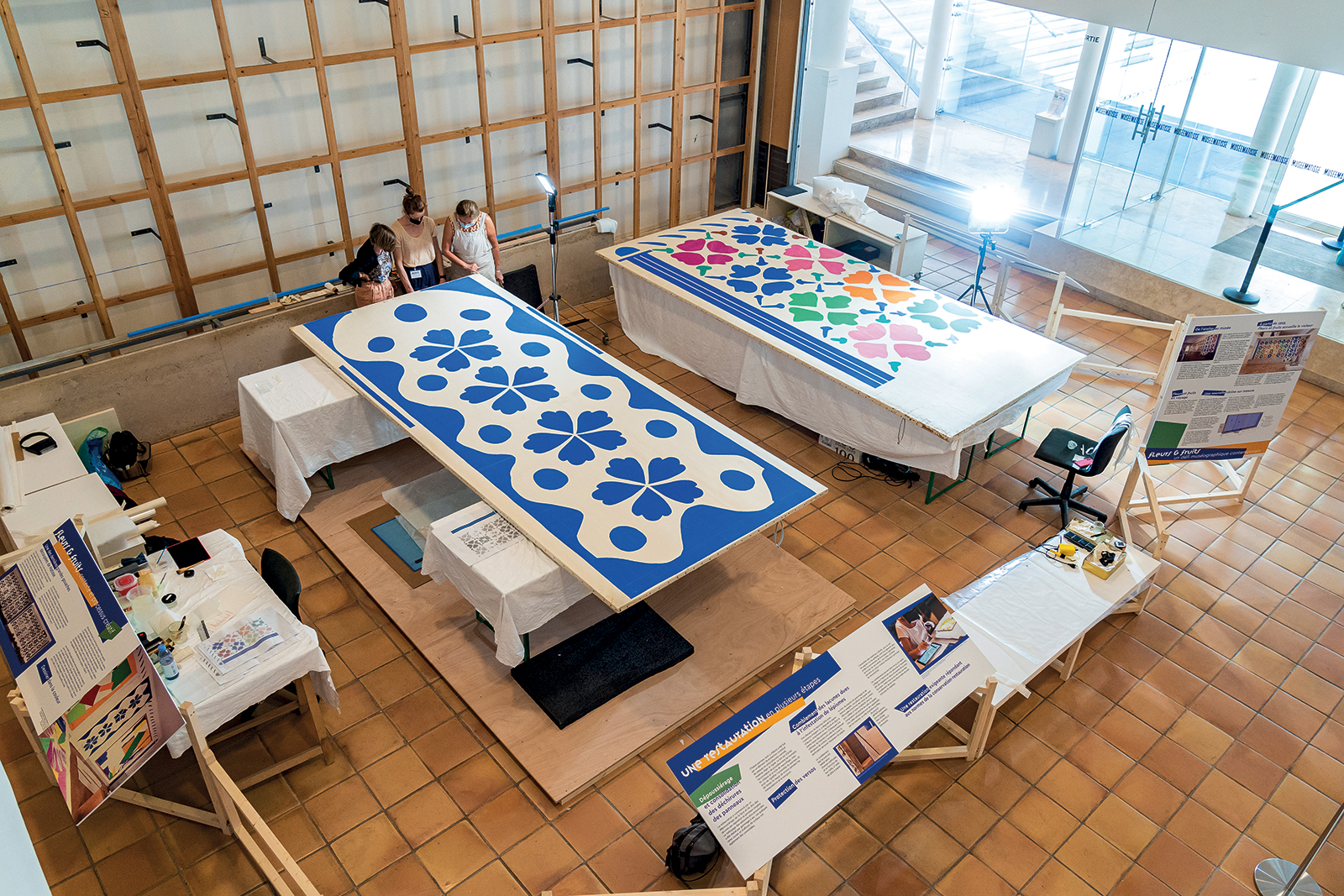
Photo © Ville de Nice – P.S. / © Succession H. Matisse for the work by the artist
Colourimetric analyses
Following this restoration, the teams from the Interdisciplinary Centre for the Conservation and Restoration of Heritage (CICRP, Marseille) began a programme to analyse the materials and techniques used by Matisse to produce his cut-outs. Initial scientific imaging and non-destructive analysis work took place in January 2022 to identify the nature of the pigments used on several cut-outs and so anticipate their reactivity to light.
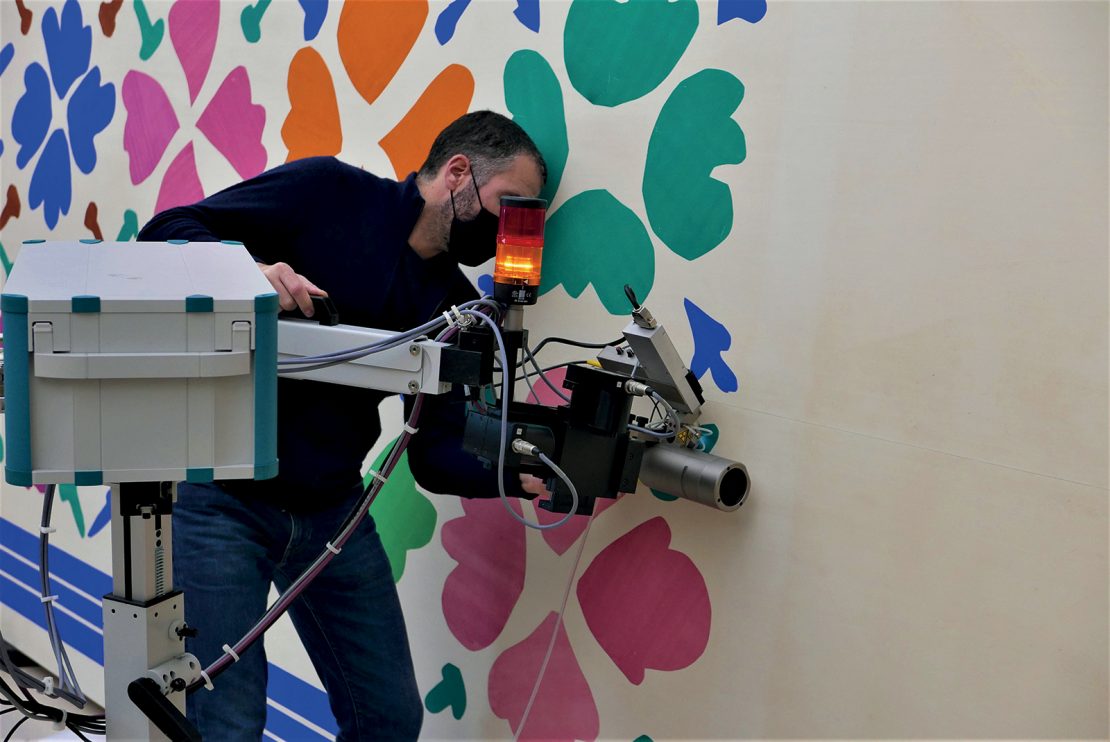
Photo © Musée Matisse – A.J. / © Succession H. Matisse for the work by the artist
A new presentation arrangement
The restored panels were installed in February 2022 in a brand new, unique, tailor-made showcase, designed by one of the world’s specialists, Meyvaert (Ghent). The work has regained all its brilliance thanks to protective glazing (Saint-Gobain) made of glass whose transparency doesn’t alter the perception of colours while blocking ultraviolet rays. Finally, the work is shown off to best effect thanks to specific lighting produced by ERCO (Lüdenscheid), which brings the panels to life and shows that colour is first and foremost about vibration.
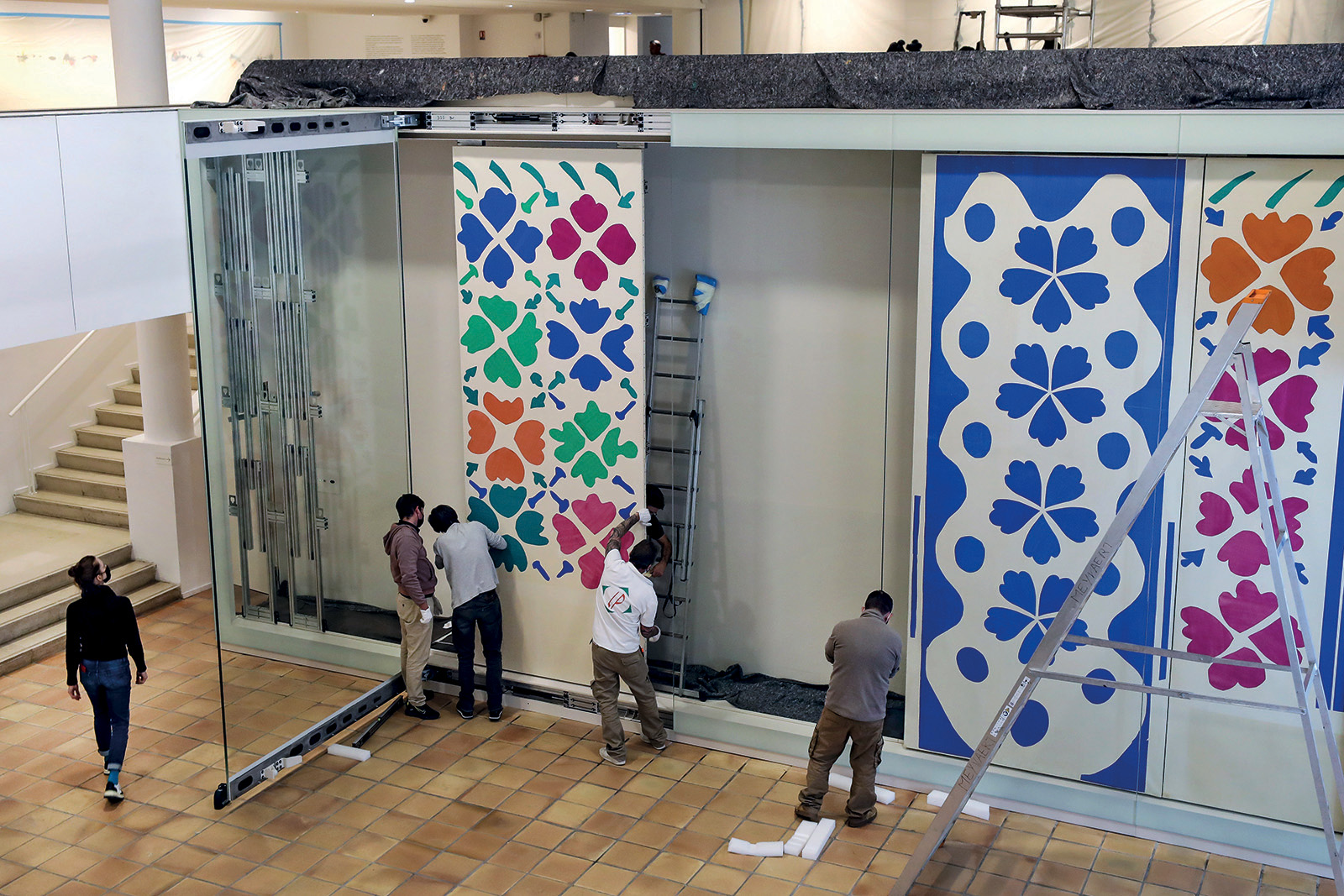
Photo © Musée Matisse – A.J. / © Succession H. Matisse for the work by the artist

Photo © François Fernandez / © Succession H. Matisse for the work by the artist
« Fleurs et fruits », une restauration historique
Learn more about the restoration of Fleurs et fruits by watching this documentary.