The Matisse Museum has just purchased the book “Poésies” by Stéphane Mallarmé, illustrated by Henri Matisse. Come and see it for yourself inside!
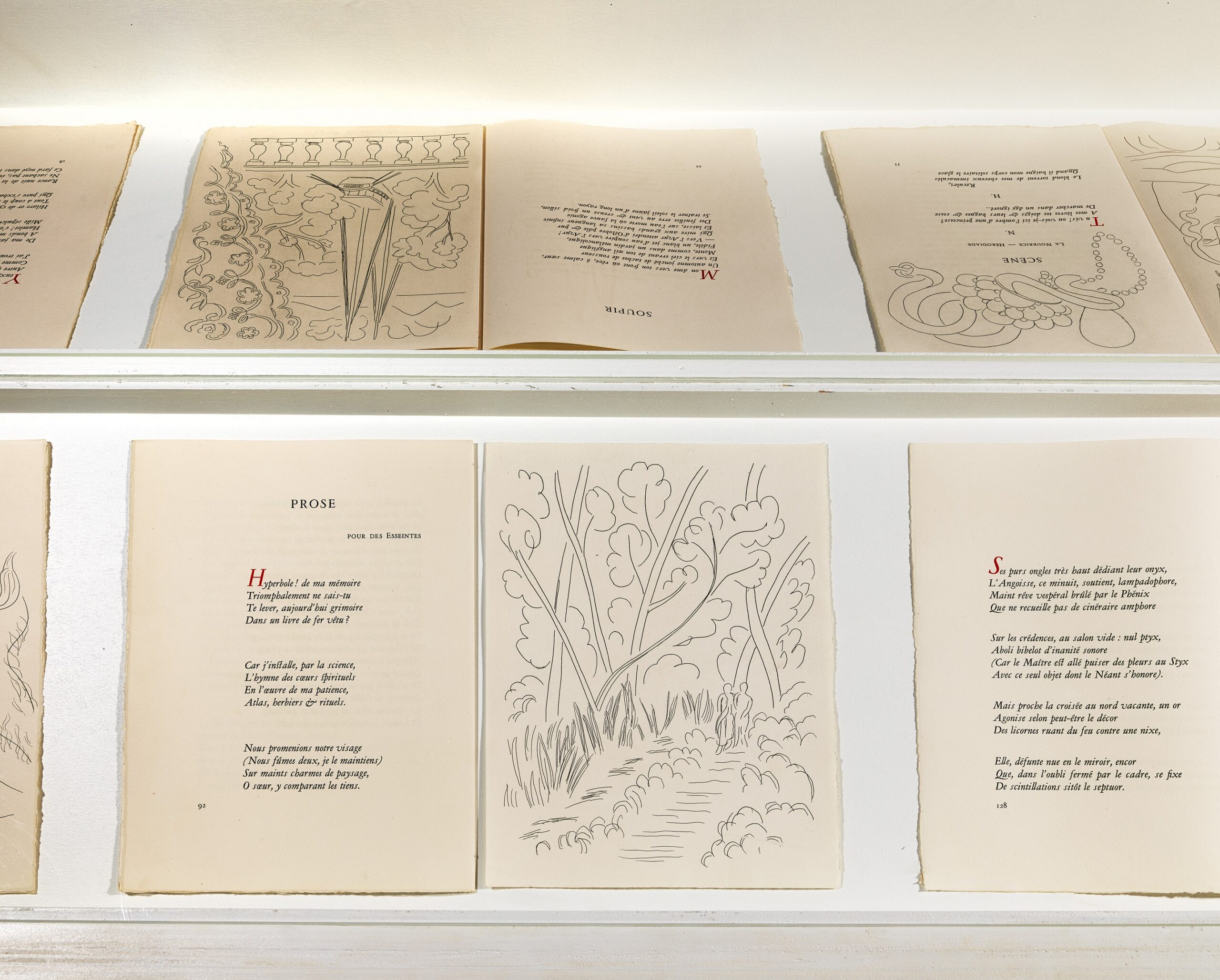
Photo © François Fernandez
Illustrated edition
Poésies by Stéphane Mallarmé, original etchings by Henri Matisse
Éditions Albert Skira & Cie, Lausanne, 1932
The City of Nice has just acquired Poésies for the collections of the Matisse Museum Nice.
This acquisition was made with the special financial support of the New Association of Friends of the Matisse Museum in Nice.
Adding this edition to the collections of the Matisse Museum, which now preserves all the artist’s illustrated books, cements the institution’s standing as a reference centre in the study of this important part of Henri Matisse’s creative output.
A sensible acquisitions policy
While the collections of the Matisse Museum are essentially based on bequests linked to donations from Henri Matisse and his heirs to the City of Nice since 1953, to which we should add deposits by the State, we now need to diversify our acquisition methods and develop a real purchasing policy allowing our institution to continue its mission of further expanding its collections.
Targeted consideration of our collections of graphic arts, printed matter, photography and documentary material helps us envisage a considered expansion of the collections, to ensure they integrate in a useful way with the museum’s collection. Indeed, many acquisitions could relate to paintings from the Matisse Museum, while others shed light on Henri Matisse’s creative process, at the heart of the museum’s scientific work, and help broaden and renew our understanding of the collection.
As part of its acquisition policy to promote resonance, the Matisse museum wished to acquire Poésies, the only book illustrated by Matisse missing from its collections, and so relaunch a process of annual purchases.

Photo © François Fernandez
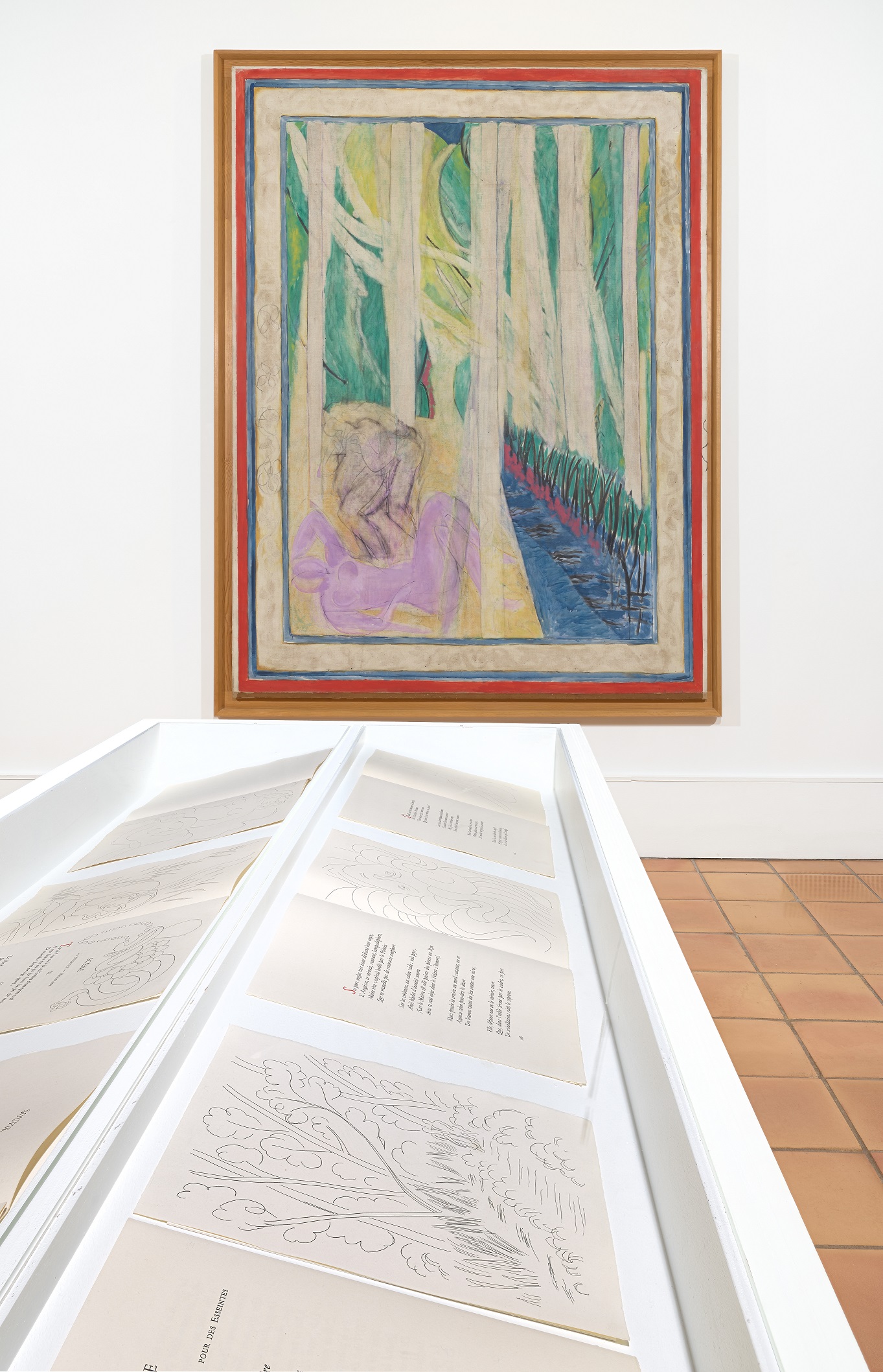
Photo © François Fernandez
A major interest for the Museum’s Collection
Henri Matisse established himself as one of the great painter-illustrators of the 20th century. However, he came late to this type of activity, through the commissions of Poésies by Stéphane Mallarmé in 1930, then Ulysses by James Joyce in 1935, before devoting himself to it regularly after his operation in 1941. He went on to produce eleven books between 1942 and 1952. Matisse was a great reader, familiar, since his Parisian early days, with literary circles. He also loved books, as shown by his vast library at Régina, which included some wonderful editions found in Paris and Nice.
Most of the books illustrated by Matisse are luxury works, or have become so, intended for art collectors, book lovers or museums. He designed them in their entirety, selected the texts, repeated reading of which brings out through free association a visual framework as well as a setting, chose the appropriate medium – linocut, lithography, or photolithography – as well as typography, its placement on the page and its size. With each of these books, he completely renewed his approach, attempting to find a visual equivalent to the text. For example, the antique Mediterranean atmosphere of Pasiphaé by Montherlant (1943) continues through the dark tone of the pages of linocut illustrations. The romantic character of the sonnets of Florilège des Amours de Ronsard (1948) matches the delicious outline of the lithographs, faces, embraces and plant ornaments. In Lettres portugaises (1946), the richness of the plant-inspired decorations reflects the nun’s love. Each of Matisse’s books offers its own space, light and tone which moves us as much as his paintings and large compositions in cut-out gouache paper. He writes on the matter: “I do not differentiate between the construction of a book and that of a painting.” (“How I made my books”, 1946)
An exceptional work essential for studying the collection of the Matisse Museum
Albert Skira’s invitation to produce an artist’s book came at the right time for Matisse, who was going through a time of crisis. He spoke of Poésies not as an illustrated but as a decorated book, emphasising the way he considered the book as a total art object. He considered the format of the page, its empty spaces, its margins and the weight of the characters as essential elements in the design of a work.
For Poésies, he chose to remove the raised marks left around the edges of the plates when printing the etchings so that his illustrations extended to the edge of the paper and so obtained maximum graphic expressiveness.
Although on a very different scale, this creation was carried out in parallel with the commission for the large wall decoration for the Albert Barnes foundation, La Danse, for which the Matisse museum retains a set of preparatory works. It is therefore no coincidence that the “Mallarmé” begins with the representation of a leaping figure resembling one of the dancers of this monumental decorative work. This commission marked a turning point, “an awakening” to use the title of the vast essay Yve-Alain Bois devoted to this founding, decisive moment for the years that would follow. According to his analysis, it was by working simultaneously on executing different versions of La Danse and on illustrations for Mallarmé’s Poésies that Matisse returned to his experimental period before 1914 and ceased to be the painter of odalisques. We then witness the possibility of a return to disorder, or at least to what creates its condition, namely a return to risk and the questioning of painting and its means.
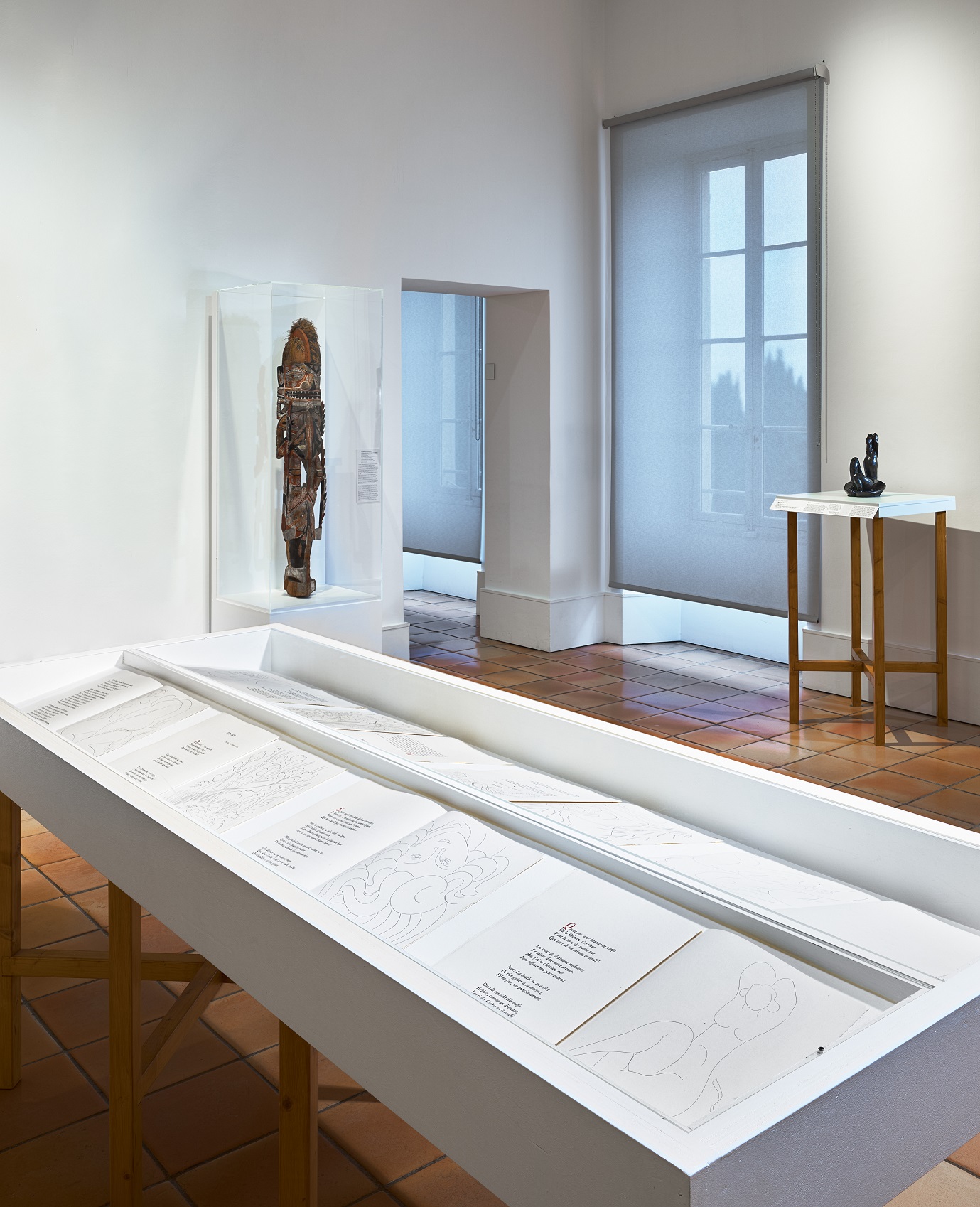
Photo © François Fernandez
Mallarmé’s Poésies also address Matisse’s personal preoccupations. Some illustrations recall his recent trip to Tahiti, such as the one for the poem “Les Fenêtres”, from which he painted Tahiti I to meet the commission for a tapestry by Marie Cuttoli. This cartoon is inspired by an etching representing the view, from a window, of the port of Papeete that Matisse had drawn and photographed during a stay in Tahiti in 1930. Matisse transposed this motif onto a canvas nearly two metres high, adding a decorative border of tropical gardenias, but when he saw the tapestry on the loom, he was disappointed. So he created a second cartoon, Tahiti II, abandoning oil for gouache to obtain a flatter, sharper effect, which he ultimately judged better suited to stained glass than tapestry.
The visual language Matisse developed for Poésies, based on the simplification and purity of line drawing, runs through his work throughout the period. As important as the commission for La Danse, the engravings he produced for the book marked a return for him to aesthetic conceptions and iconographic themes (fauna in particular), in which he had become interested through Fauvism and to which he returned with Nymphe dans la forêt (La Verdure), a major work in the Matisse Museum collection and another tapestry project for Marie Cuttoli. Its motif synthesises in a single composition two illustrations from Poésies: that of “Faune”, for the figures, and that of “Prose pour des Esseintes”, for the forest. Probably giving up quite quickly on having this panel transposed into a tapestry, Matisse brought it back to his studio after exhibiting it at the Rosenberg Gallery in May 1936. He continued to work on it sporadically until 1943. This experimental work is today at the centre of important research work led by the museum.
The acquisition of Poésies, the origin of two masterpieces in the collection, is therefore a fundamental issue for the museum.
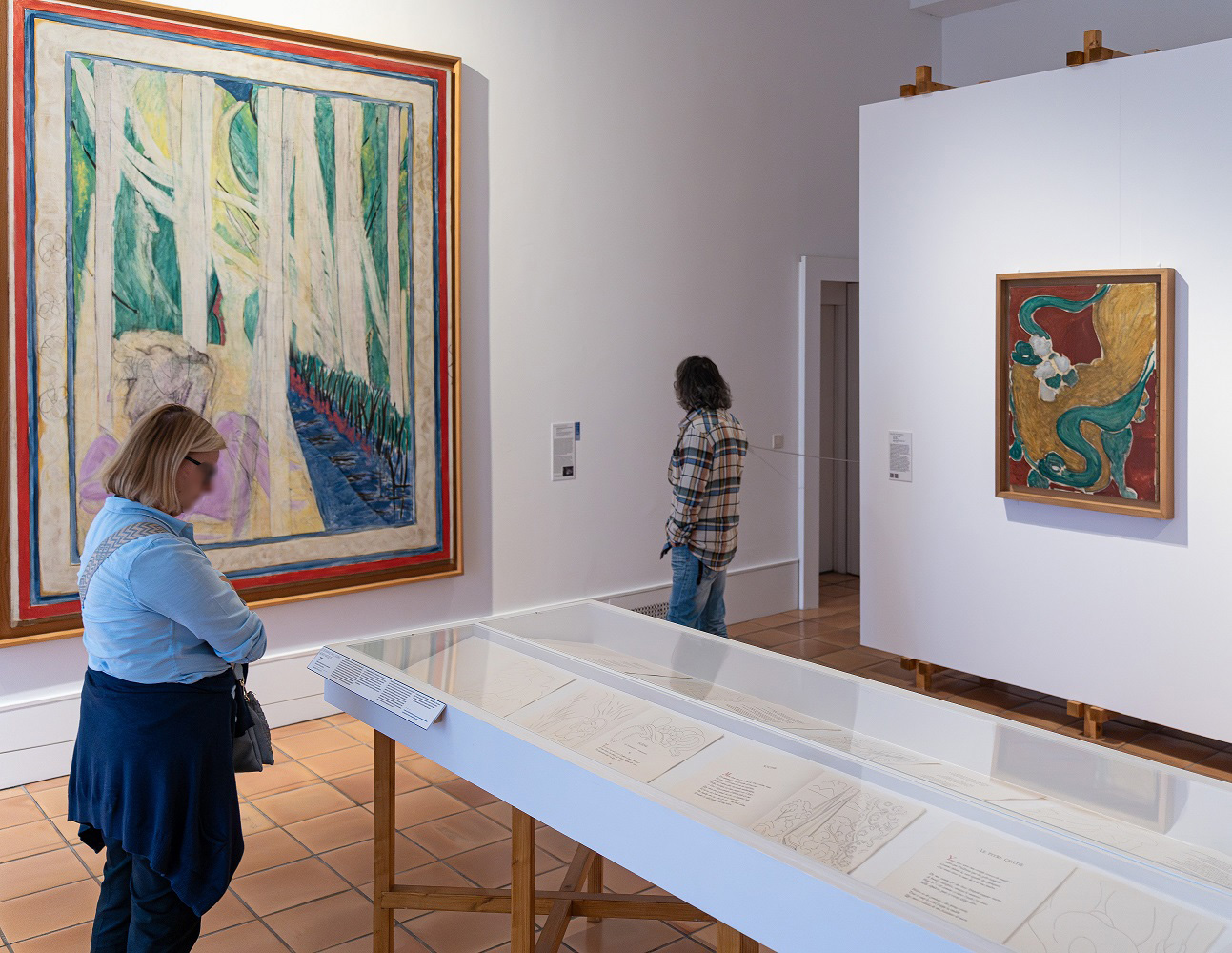
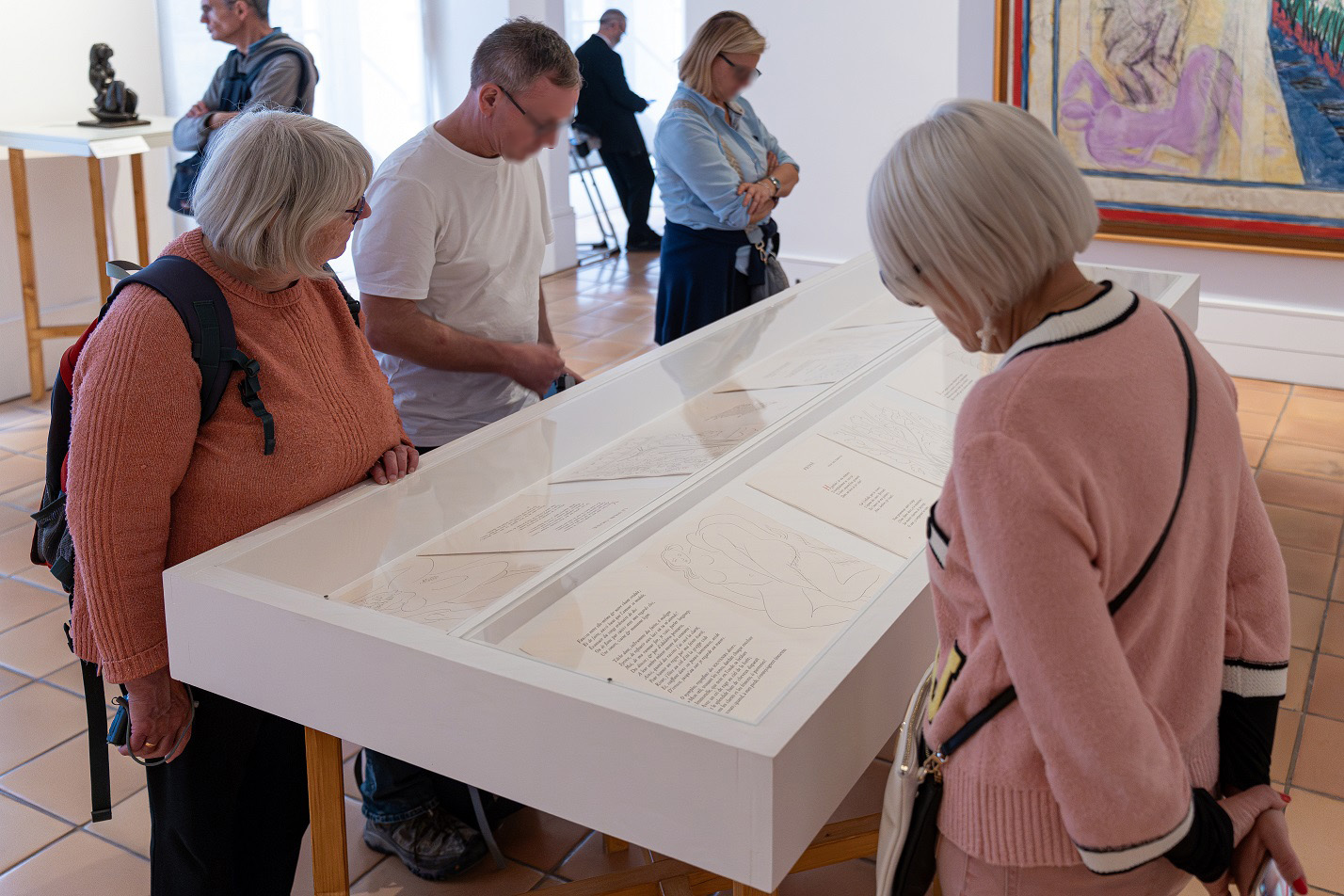
Photo © Ville de Nice – Julien Véran