Élise (Albertine Henriette) Löwengard-Clarnète, known as Lisette (7 June 1910, Villennes-sur-Seine – 9 March 2001, Pérignat-lès-Sarliève) was just 18 years old when she met Matisse, for whom she posed from 1928 to September 1933. She occupies an all the more interesting place among his models as she was the involuntary witness of a pictorial crisis and the torments it entailed, as well as the renewed creative vigour aroused in the painter by Albert Barnes’ commission of a large decorative work for the entrance hall of his foundation in Merion. Before Lydia Delectorskaya, she was the first to work using the paper cut-out technique that Matisse developed for use on large-scale works.
Matisse fell in love with these dresses, in which he took obvious pleasure not only in painting me, but also in photographing me; he loved them and made them his own. This seemed to me to be in the normal order of things […]. Matisse combined the jealousy of a sultan in love with the generosity of a prince. He had the consideration of a father for me and the moods of a tiger.
Lisette Löwengard
In 1989, in an article published in Madame Figaro, Lisette recounted her years spent with Matisse. For example, she describes her role during the production of La Danse (The Dance) for the Barnes Foundation: “After posing naked, I put on my blouse and climbed onto the huge platform on wheels to pin the drawing to the wall. I moved it to the right, to the left, as he instructed. He asked for my opinions.” This detail confirms the multiple functions certain models sometimes assumed in the works of Matisse. Alongside the artist’s wife, Lisette also took on the role of nurse. In one of the many drawings with which he liked to decorate his letters, Matisse sketched her humorously while she attended to his wife, and mentions elsewhere the benefits of the massages she gave him to relieve the neuritis in his arm.
An almost familial intimacy tinges her relationship with the painter and his wife. She confides:
He and his wife accepted me into their daily lives. From the day they knew I was the niece of Ernest d’Albret – one of his antique dealer friends who supplied Matisse with his old frames – I became part of the family. Adopted, I entered the villa with my cat and two parakeets. To mark the occasion, Matisse bought himself an aviary which he subsequently filled with other birds.
Lisette also tells us about Matisse’s habits, noting for example the speed with which Madame Matisse’s seamstress sewed new dresses for her, confirming the importance he attached to certain clothes and accessories during the creation of a painting. The attention he paid to the black piped collar that Lisette wore, as a sign of mourning, when he first noticed her at an antique dealer in the Masséna district of Nice and the fact that he had her buy six more are revealing. As if he had immediately “visualised” the aesthetic effects he could draw from this detail of clothing, including it in a future pose as soon as he spotted it.
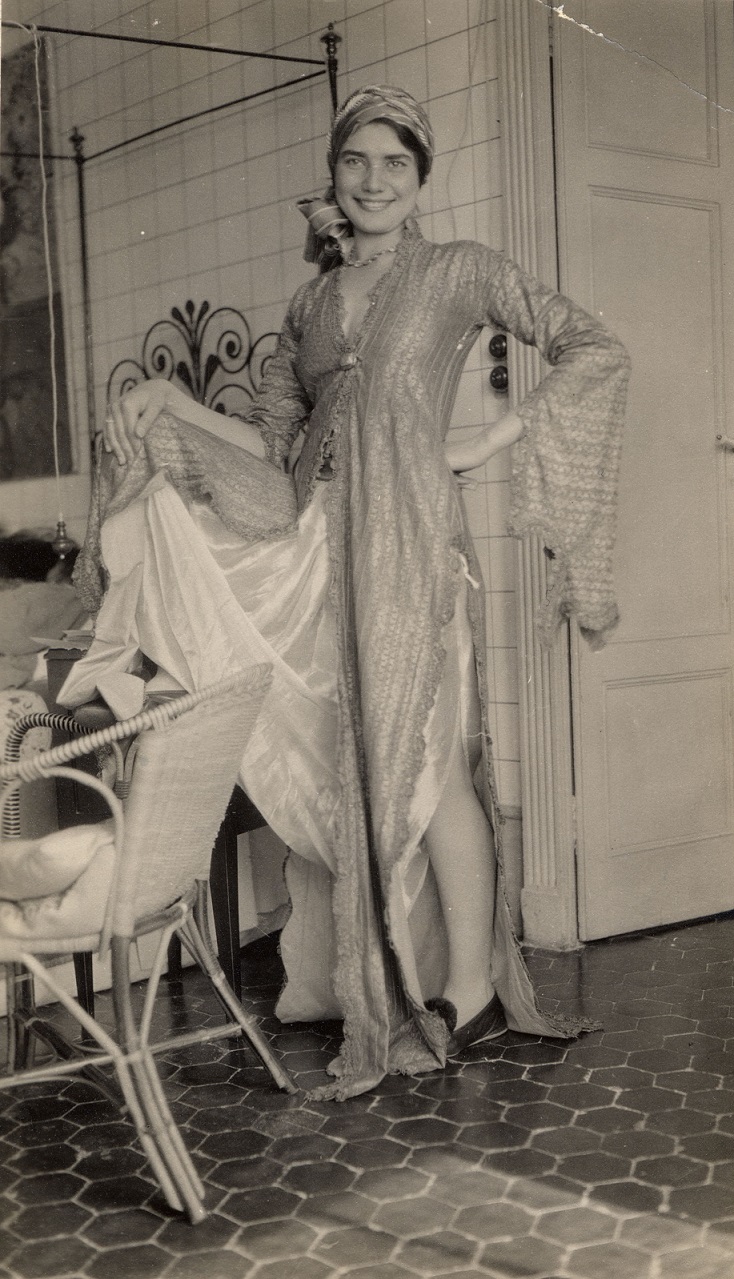
Photo: Archives Henri Matisse
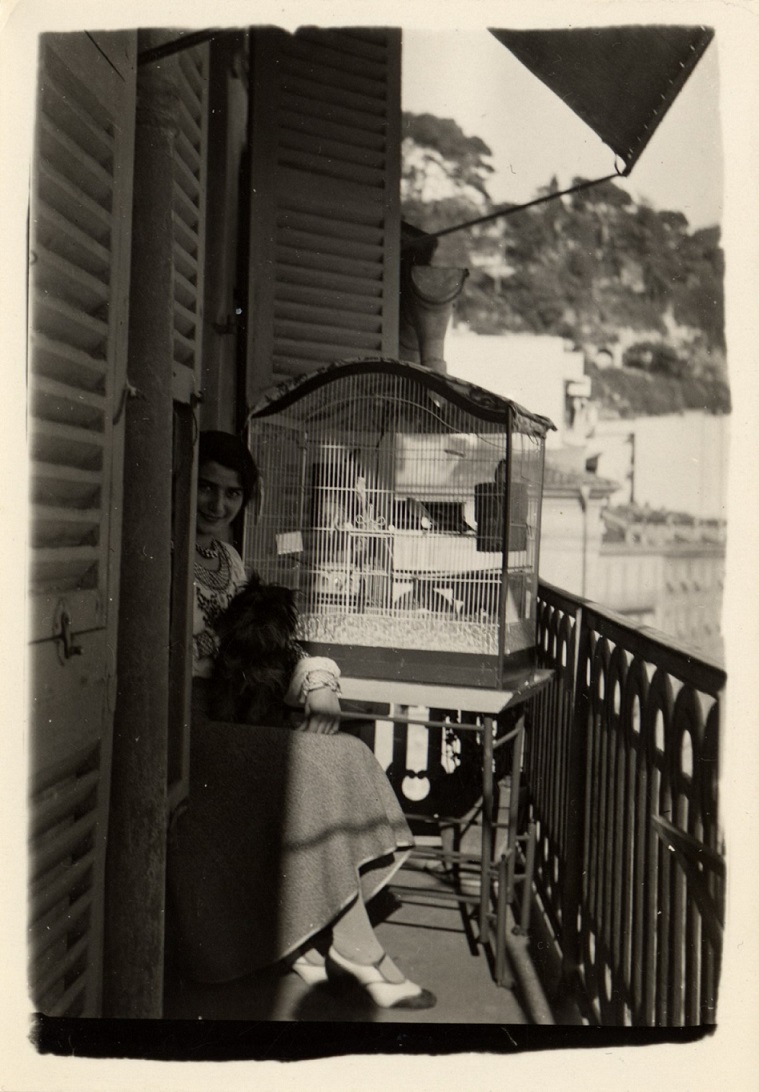
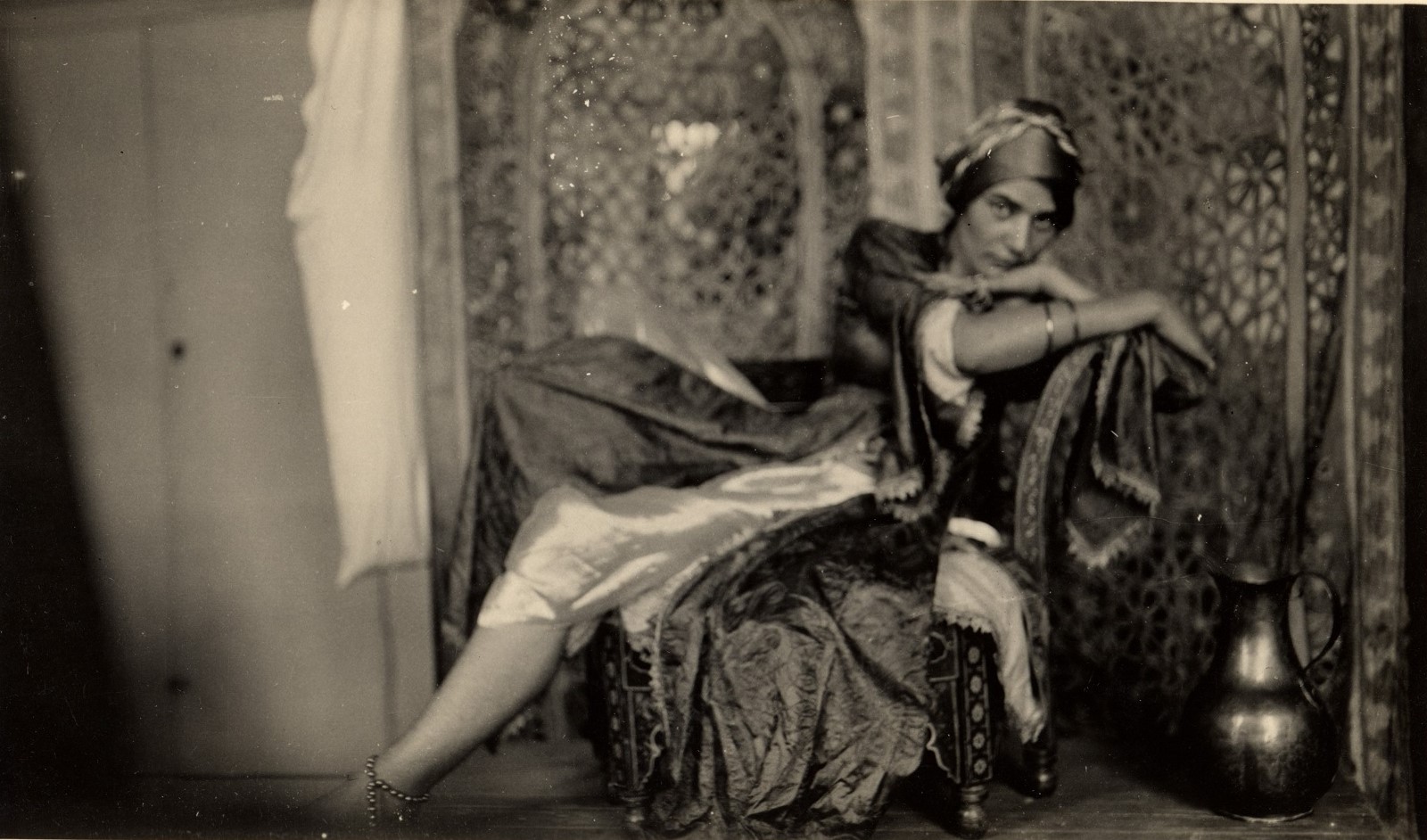
Photo: Archives Henri Matisse
Lisette in the work of Matisse

© Succession H. Matisse
Photo: Mitro Hood
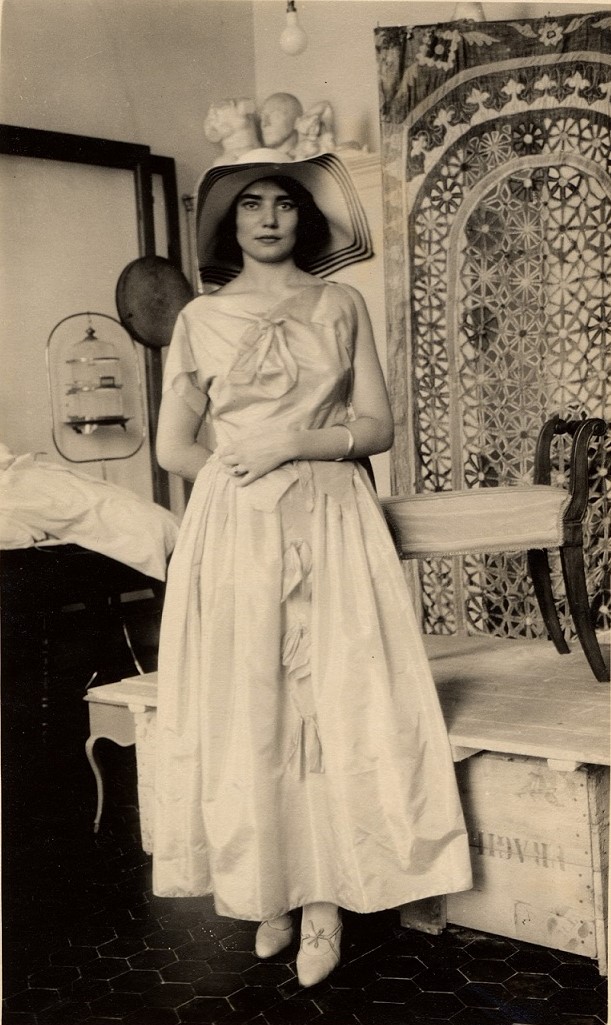
Photo: Archives Henri Matisse
The regular correspondence Matisse maintained with his wife Amélie during his trip to the United States and Tahiti in 1930 details his obsession with Lisette’s physical fitness and thinness: “You can tell Lisette to do exercises to stay flexible and not gain weight because I will need her” (Letter to Amélie, 26 April 1930, Henri Matisse Archives). This mark of the almost fanatical attention he paid to his model’s appearance is also, undoubtedly, in a less anecdotal way than it seems, the symptom of a general unease present in his work. Unease which ate away at him when, in March 1930, he travelled for the first time to the other side of the Atlantic without finishing a painting for which the young woman posed, La Robe jaune (The Yellow Dress, Baltimore Museum of Art). This painting haunted him, and its memory left its mark on his daily life abroad. On the day he arrived in New York for a second stay in America, on 19 September, when he spent a month working in Nice on the portrait, he wrote to Amélie:
I put in a telegram that Lisette had to do her gym every day because I found her very stiff? It came back to me when thinking about my future work. I plan to rework the painting of the yellow dress which I would like to be more complete.
Letter from Henri Matisse to Amélie, 19 septembre 1930, Archives Henri Matisse
The stiffness for which he reproaches the young woman returns in the vertical axis that represents her bust, in the way it’s placed in a block of shimmering fabric which absorbs her legs and the chair on which she is supposedly seated. Matisse geometrises her body here so that woman, clothing and object merge. The art historian and curator Yve-Alain Bois sees in the removal of the armchair and resultant sensation of levitation, echoes of the parallel research that Matisse carried out from January 1931 on La Danse to lead to an architectural conception of painting.
From engravings with a traditional composition a few centimetres long to the three panels of La Danse which each measure more than three metres by four, Lisette’s protean body features in the works of the turn of the 1930s and is part of the painter’s evolving practice for three decisive years. Captured in pencil or pen, it’s a classic motif. As part of Albert Barnes’ commission, it became the almost abstract material of a decorative visual art which sets the pace and brings an immense surface to life to combine the vitality of dance and construction of space.
Lisette through the works of the collection
The Musée Matisse Nice keeps several engravings representing Lisette as an odalisque, testifying to the persistence of this motif at the end of the 1920s: La Persane (The Persian, 1929) or Persane à la croix trifoliée (Persian with the Trifoliate Cross, 1929). We note that Matisse had his model’s forehead and chest tattooed with “small blue crosses of North African inspiration”, in a gesture of “literal” borrowing from an Arab culture that he fantasises and distorts. This make-up is, along with the use of “Persian” tunics, openwork wall hangings and stereotypical objects found in Morocco or from antique dealers in France, among the most obvious reflections of the orientalism which characterises Matisse’s production of the 1920s. This fanciful addition, which combines Morocco and Iran, probably refers to the tradition of Amazigh tattooing (with henna), of which Matisse could have seen examples during his travels to Tangier in the early 1910s, or even on the postcards of which he was an avid consumer. This orientalist dimension gradually wore down and took a more indirect form as these clichés and quotations were aggregated into a decorative substrate that mixed exotic references with total indifference to their geographical origins.
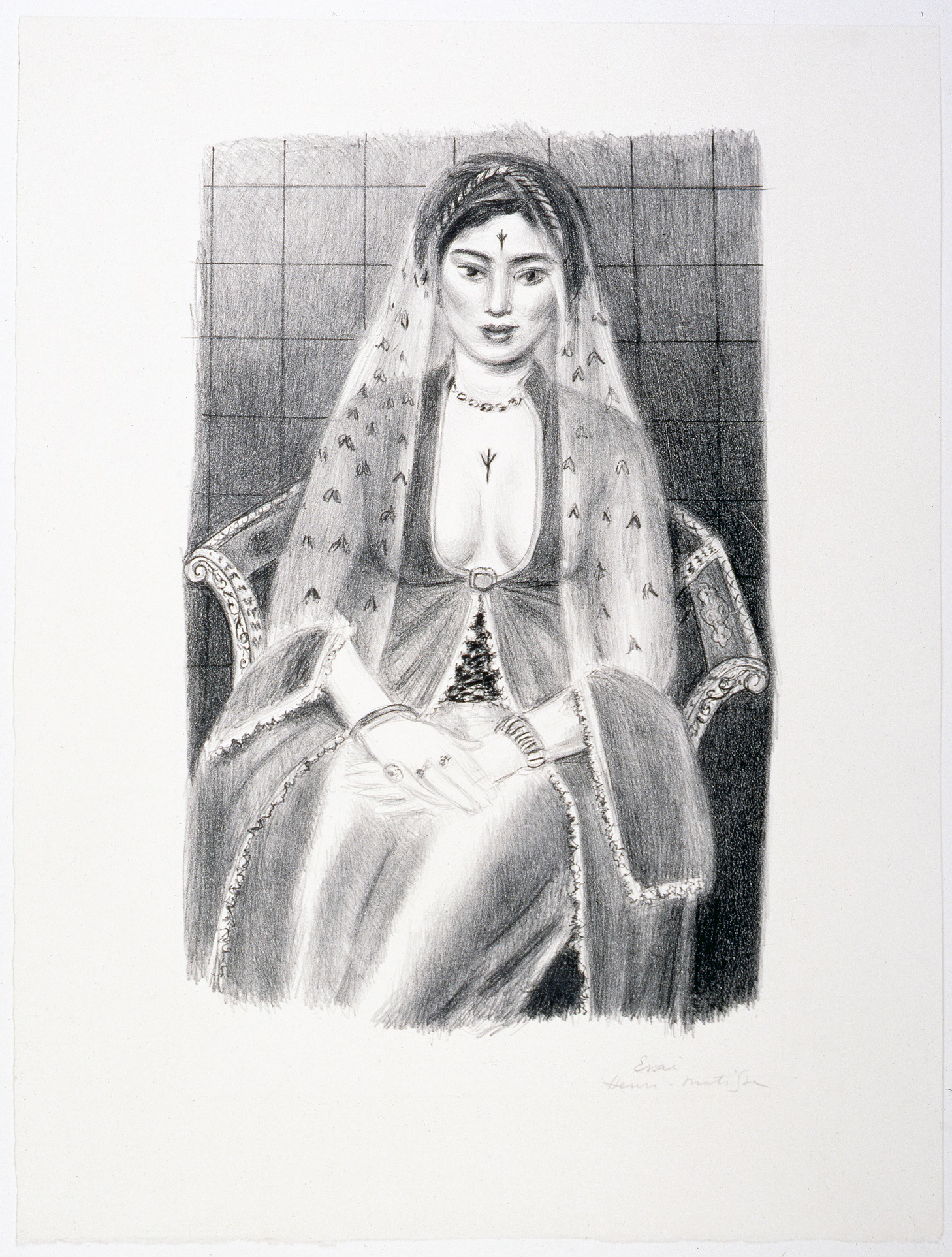
© Succession H. Matisse
Photo © Ville de Nice

© Succession H. Matisse
Photo © Ville de Nice